§ 01 — The place
A lower-Montmartre building, double courtyard, studios at the back
34 boulevard de Clichy stands in lower Montmartre, at the heart of the historic Pigalle district. The boulevard itself was home to Degas (no. 6), Picasso (no. 11 and no. 130), Renoir, Sarah Bernhardt, Pascin (no. 36), Daumier, Anders Zorn (no. 71), Signac (no. 128 bis), Kupka (no. 83) and Jean-Léon Gérôme (no. 65). Long discreet, no. 34 hosted Manet, Pottier, Dargaud, Henri Marre, Hella Guth, Pierre-Luc Feitu, Michel Batlle — among many others.
The four-storey street building was constructed between 1801 and 1850 (source: Paris cadastre). At the back of the courtyard, a set of artists' studios in brick and timber framing — built between the late 19th and very early 20th century — is reached through a sloping paved alley.
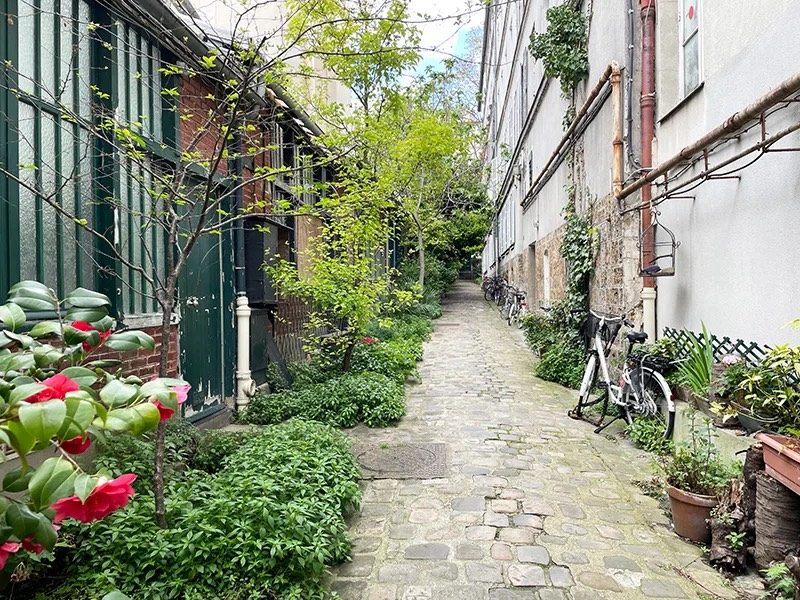
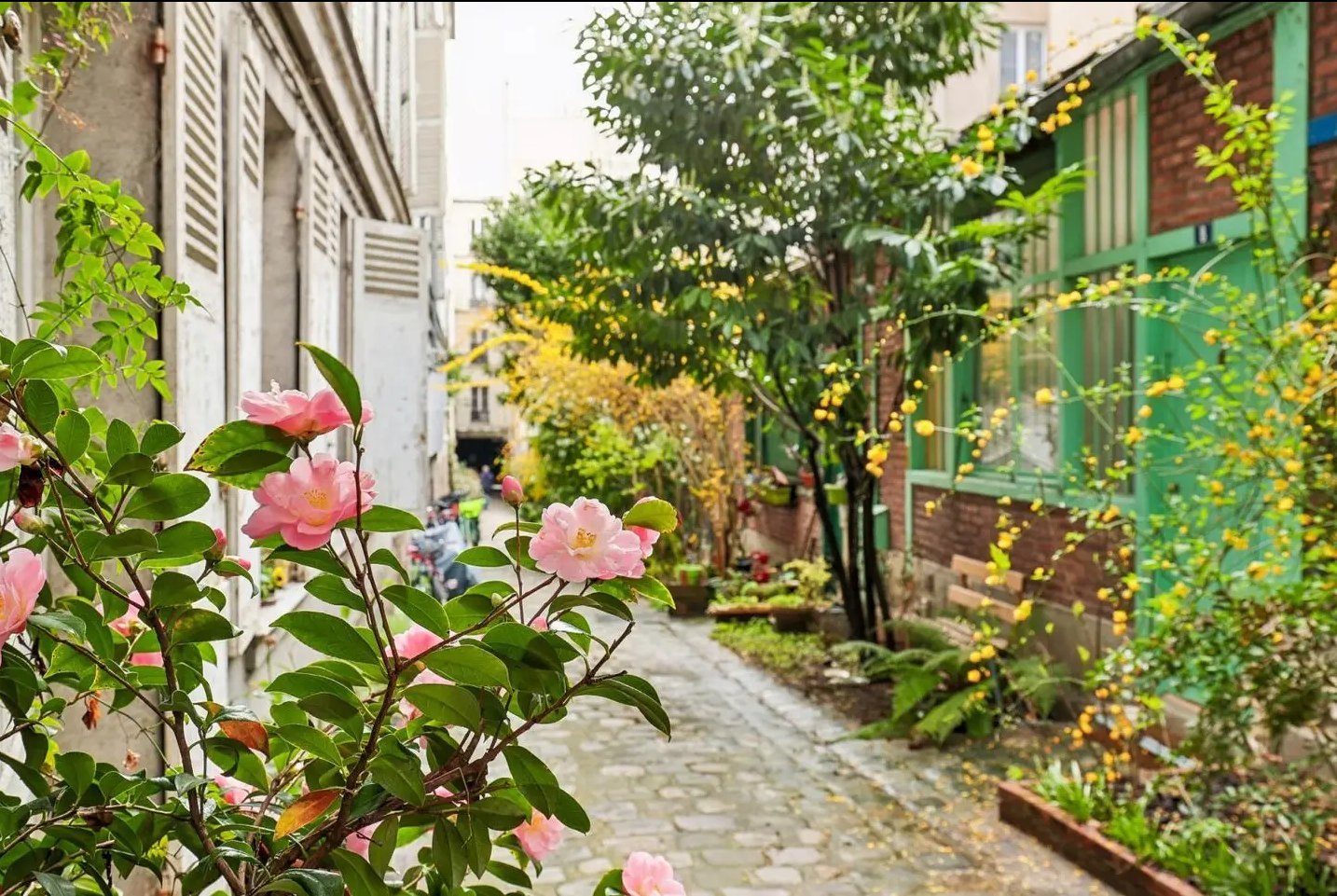
You are on the lower foothills of the Butte. The brick-and-timber studios stand to the right; the street building closes the courtyard on the left.
A porte cochère — still recognisable in early photographs — opens onto a first courtyard. The alley climbs slightly: this is the foot of the Butte. It leads to two small "doll's houses" at its end. And, surprise: behind the rear building, a tiny second courtyard opens onto further studios buried in greenery. The street building is locked by a digicode and the private courtyard is not open to the public.
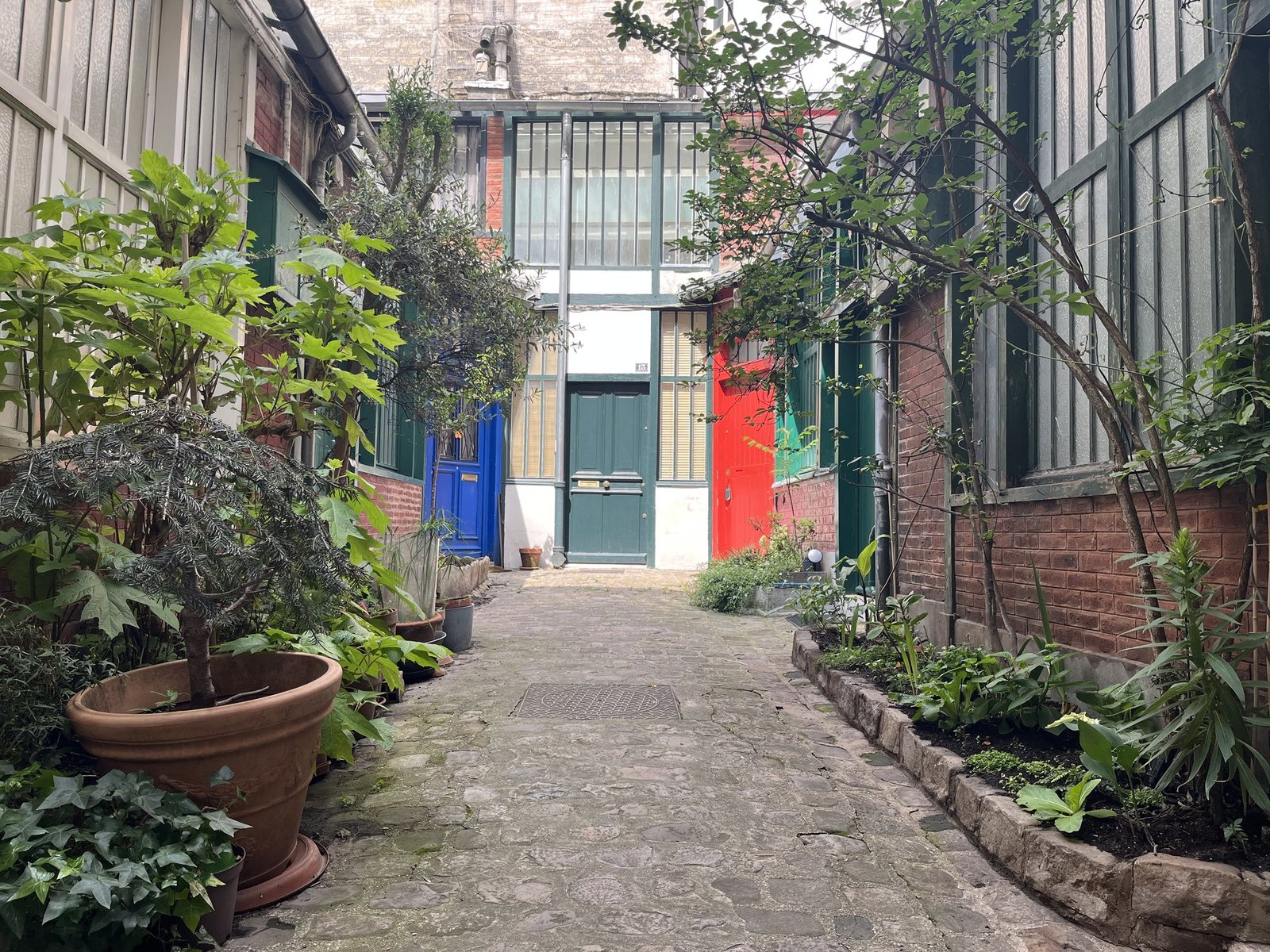
When you step through the porch, what strikes you most is the silence. You feel as if you were in the countryside. A small bucolic paradise, a preserved space. Sixteen artists' studios, a paradise of greenery.
The real Montmartre. A hidden treasure.
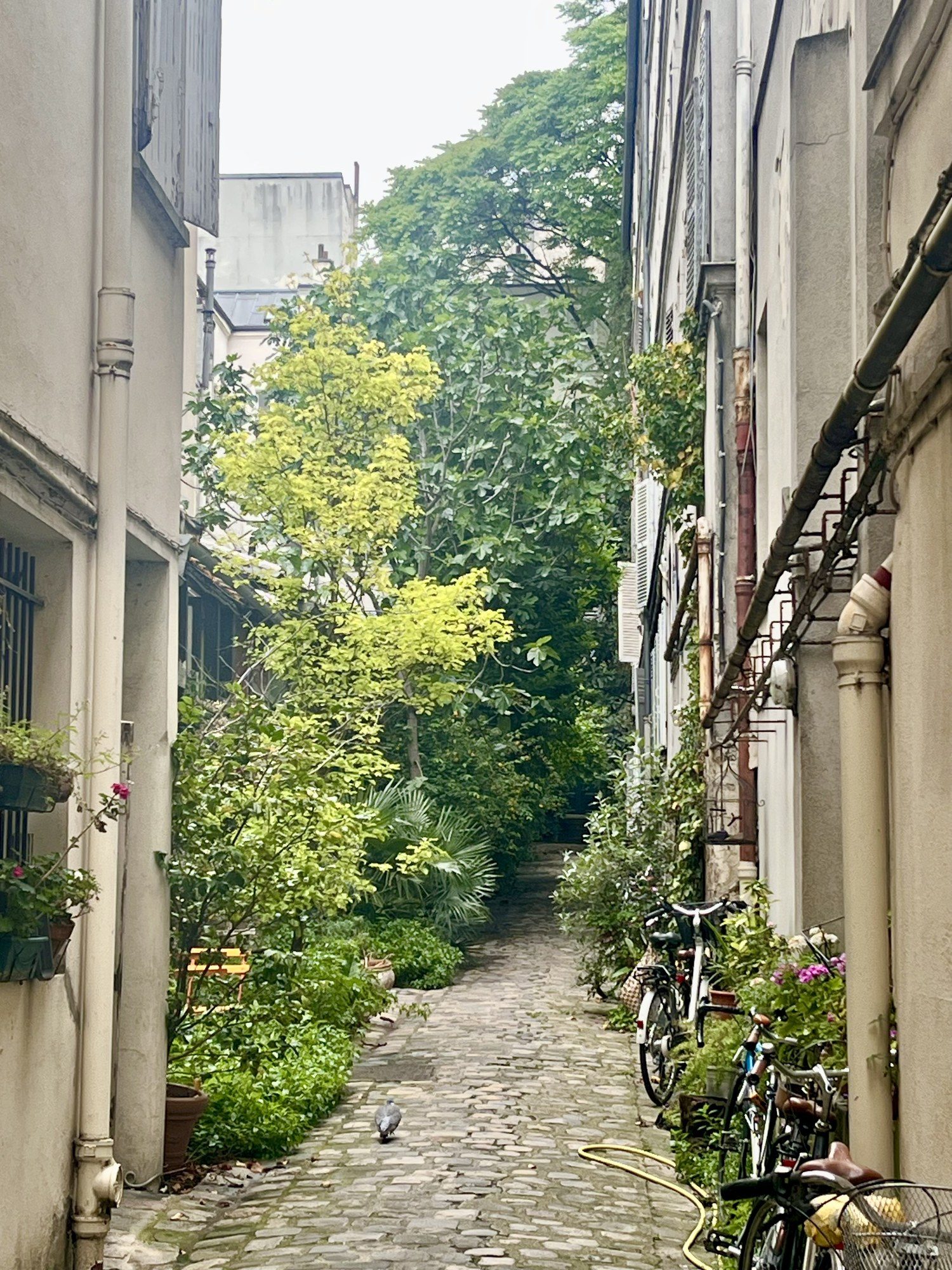
In spring 2026: paving stones, potted plants, wisteria and Virginia creeper climbing the facades — the contemporary echo of the artists' studios of no. 34.
The website Paris-Promeneurs describes these studios as emblematic of the golden age of Montmartre, buried in vegetation and retaining a great deal of character. They are documented photographically by the blog Paris-bise-art in an article dated 26 February 2021.
The plot and the double courtyard
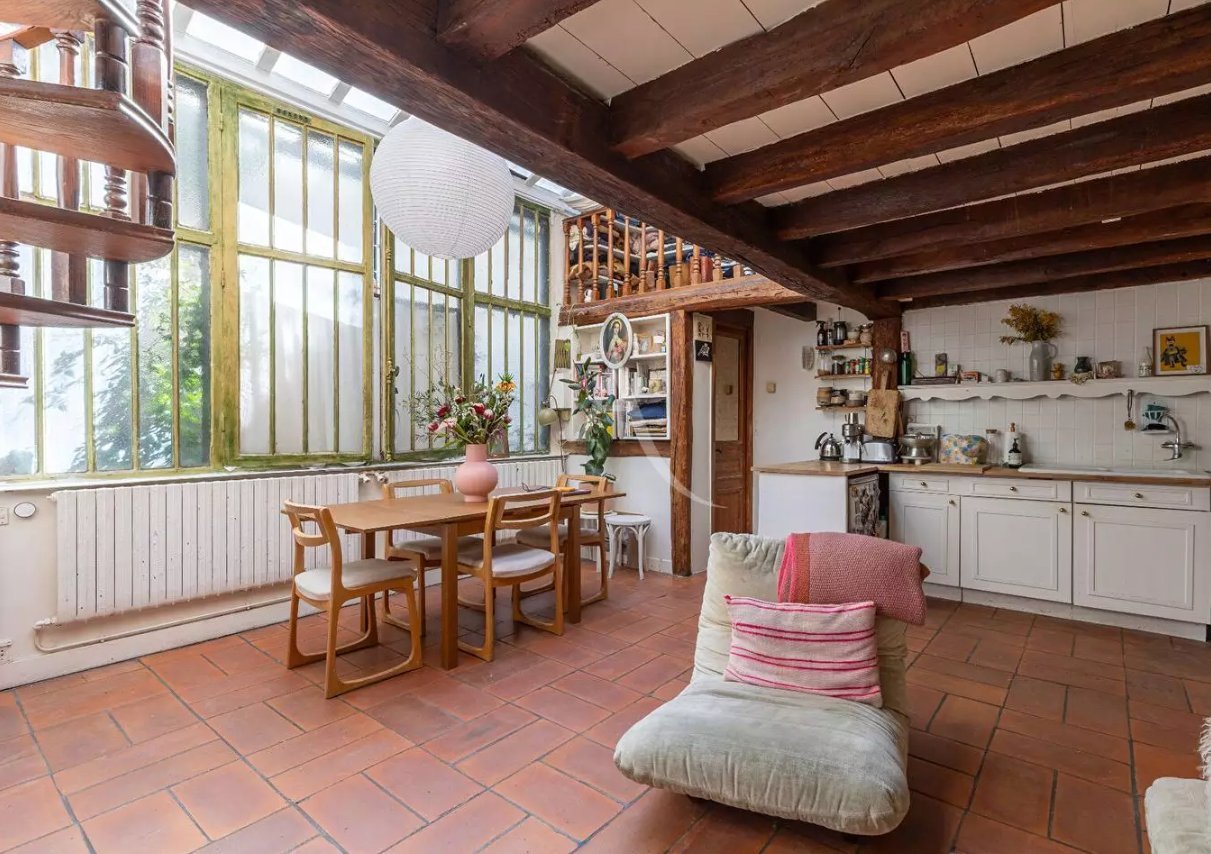
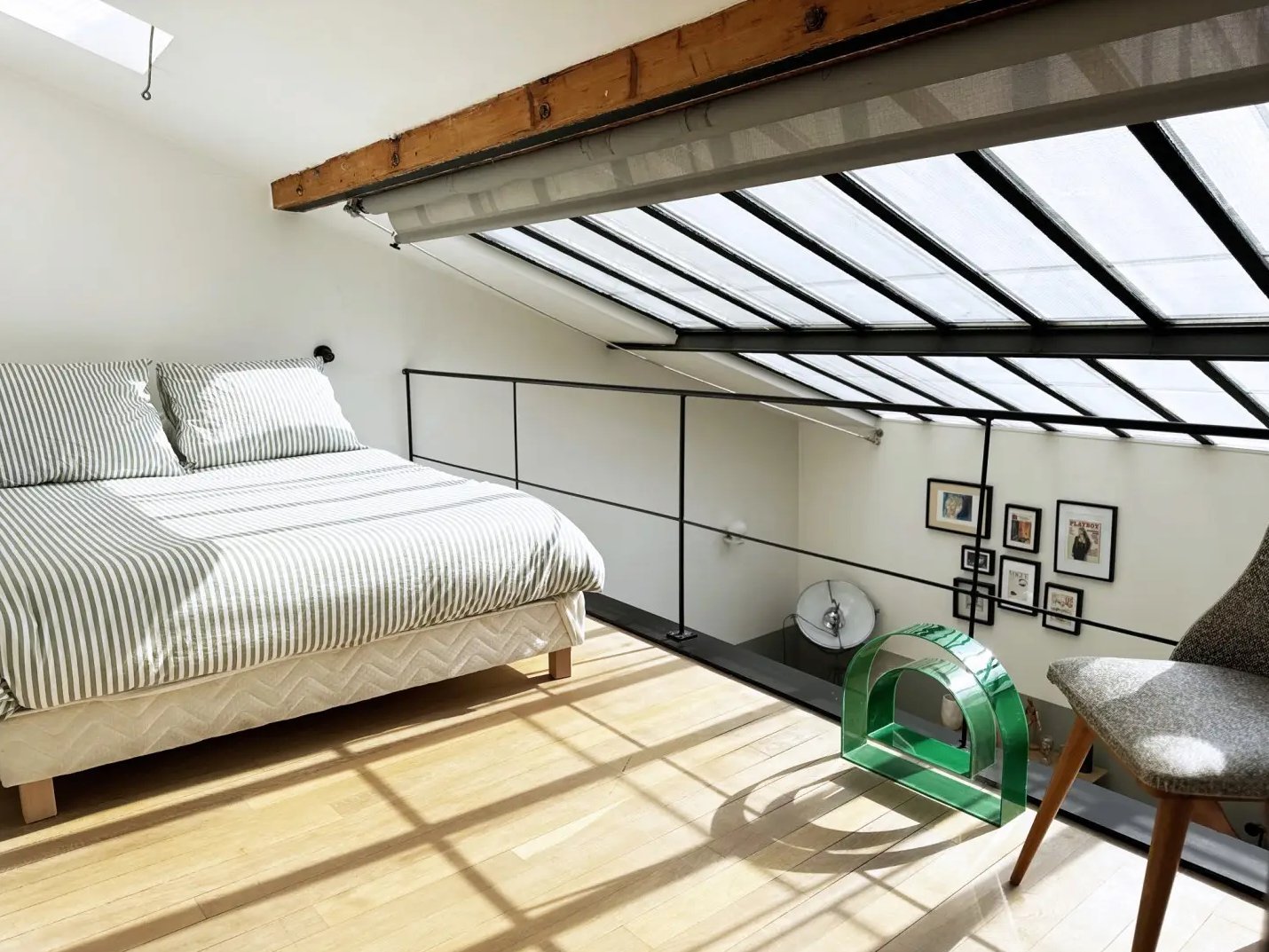
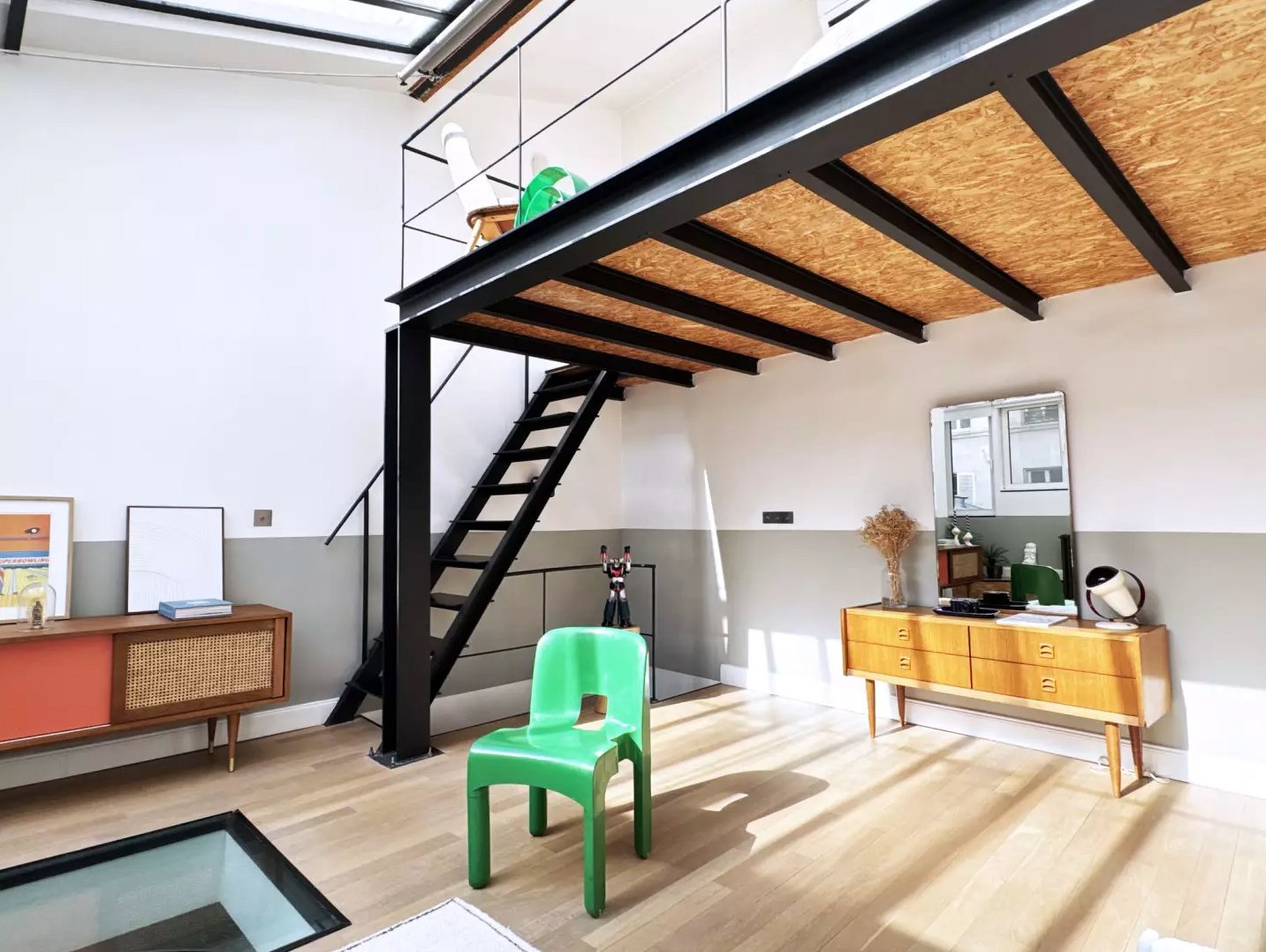
The total plot area is 1,867 m² — a sizeable parcel for the boulevard, which explains the double courtyard with studios at the rear. A 1989 redevelopment turned several volumes into housing-studios for artists, prolonging the historic vocation of the place. As recently as 2009, roof windows were added to a unit officially declared as "housing and artist's studio" — proof that this studio function has never been interrupted.
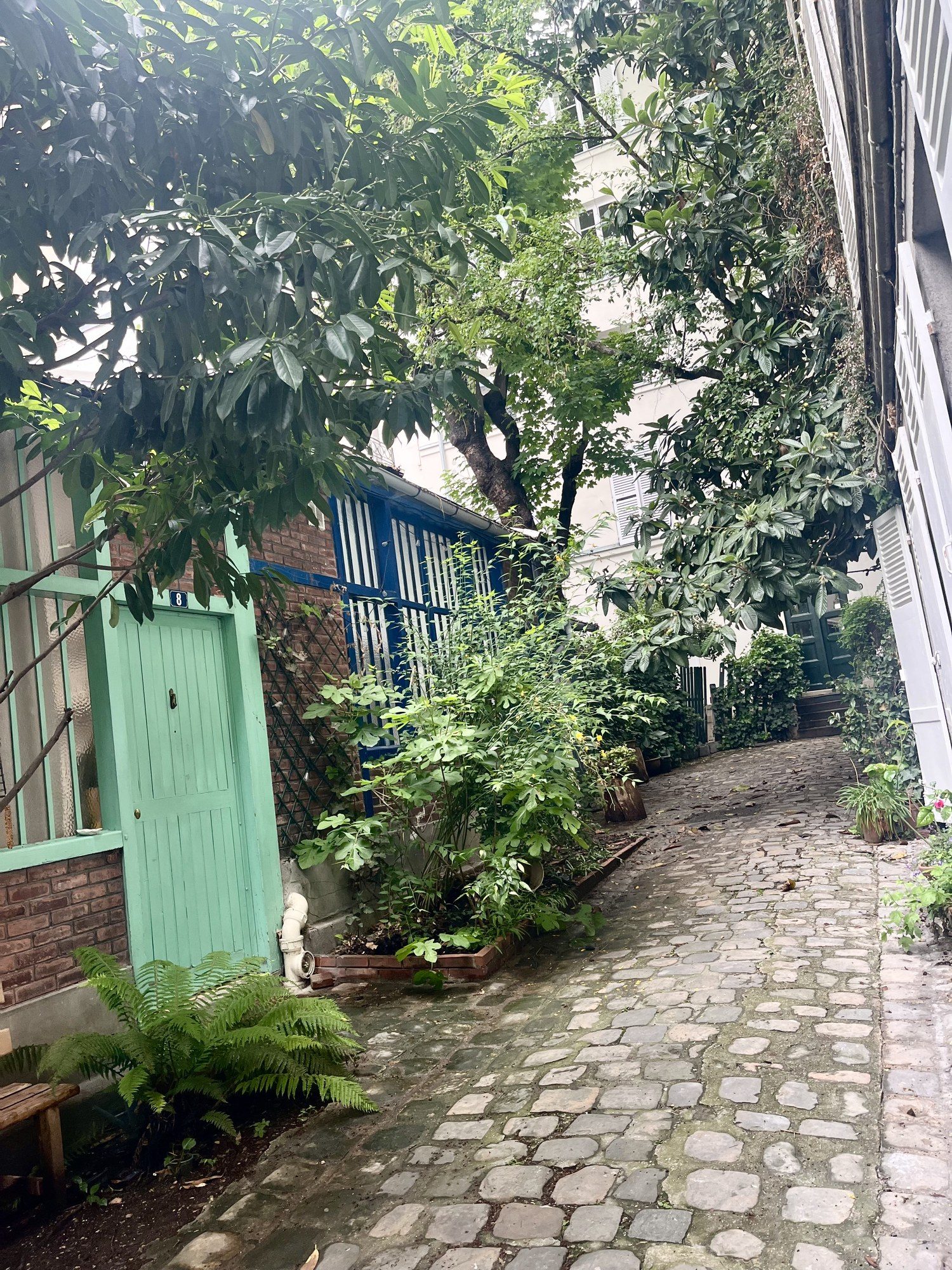
Sea-green door, blue-barred window, fern, fig tree, damp paving stones — the typical colour scheme of Parisian artists' colonies, fixed here for more than a century.
Eiffel steel in the glass roofs — an oral tradition
According to an oral tradition reported by the residents, the steel used for the glass roofs of the rear-courtyard studios is said to come from the building site of the Eiffel Tower (1887-1889). The Eiffel filiation remains to be formally documented, but it is plausible: La Ruche, the Bateau-Lavoir and the Villa des Arts were indeed built using metal frames recovered from the pavilions of the World's Fairs or supplied by the Eiffel workshops in Levallois-Perret, which produced 6,360 tonnes of iron for the Tower.
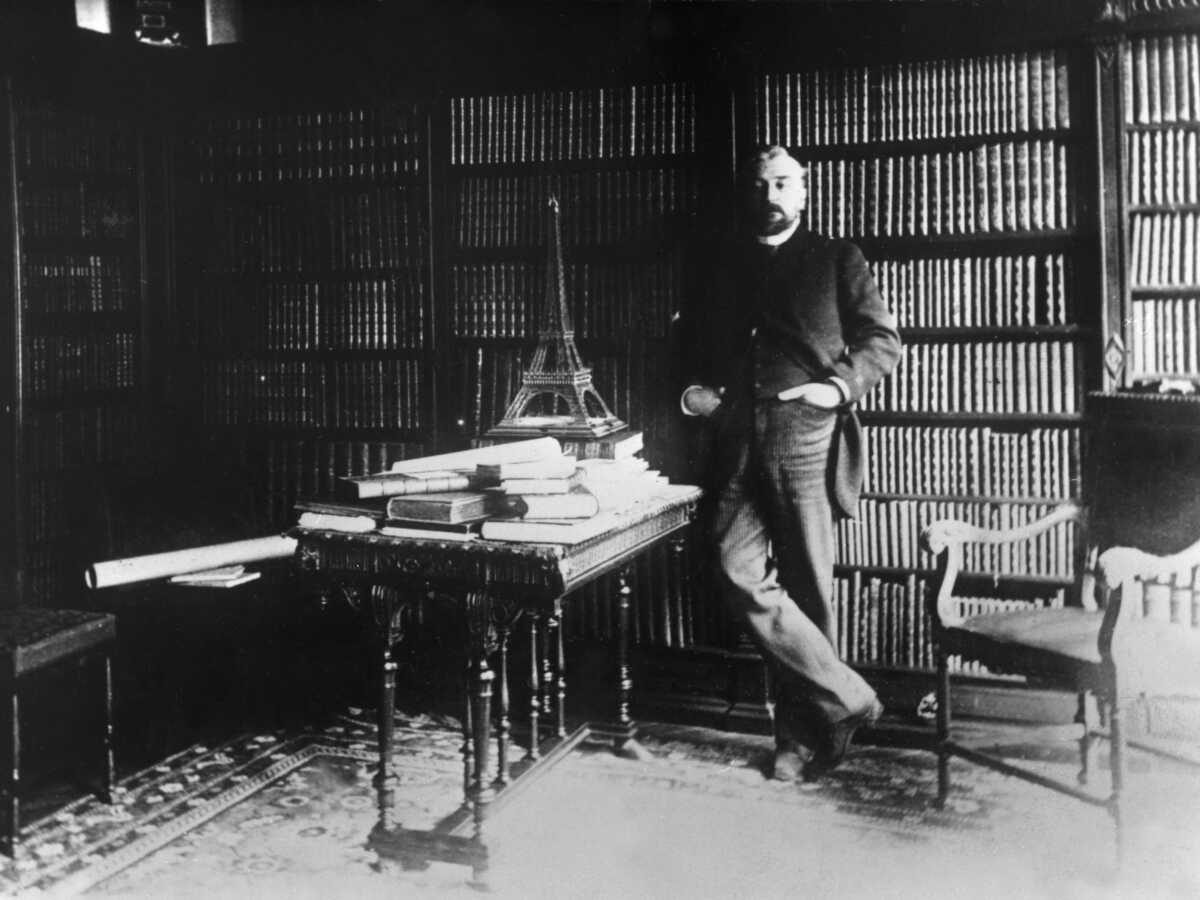
The Eiffel workshops in Levallois-Perret, which prefabricated the Tower, also supplied many Parisian artists' colonies with their metal frames.
Distinct from no. 11 boulevard de Clichy
§ 02 — Timeline
162 years of uses on the ground floor and in the courtyard
The address "34 boulevard de Clichy" took its definitive number in 1864, when the three former roads (Martyrs, Pigalle, Clichy) merged into a single boulevard. The building itself (1801-1850) is older, but it is in 1864 that the "34" as we know it today was born administratively — that is, in 2026, 162 years of official existence.
Café-Brasserie Reichshoffen
An Alsatian establishment run by a certain Renault, named after the 1870 battle. Its presence is documented from the autumn of 1878 by Édouard Manet's paintings (Reichshoffen series).
Studio of Paul-Joseph-Victor Dargaud
The painter of the Sacré-Cœur worksites set up his Parisian studio at no. 34. An ideal viewpoint on the basilica under construction, just 600 metres away.
Reichshoffen series — Édouard Manet
Manet, then 46, painted The Waitress and several scenes of the café-concert on the ground floor. The original canvas was later cut into two fragments, redistributed between Glasgow and Paris.
Eugène Pottier's studio
Returning from exile after the 1880 amnesty, Pottier rented a textile-pattern designer's studio at no. 34. He worked there on his Revolutionary Songs, published in 1887 — the volume in which the lyrics of The Internationale first appeared in print.
Brasseries Riester then Coq d'Or
Successive ground-floor establishments: Grande Brasserie Riester, then Grande Brasserie du Coq d'Or (Eugène Becker), a modern Alsatian establishment. Promotional cards preserved in the BHVP-Actualités collection.
The rear-courtyard studios
At the back of the courtyard stands a group of brick and timber-framed artists' studios lit by large glass roofs, probably built between the late 19th and the very early 20th century. According to residents' oral tradition, the steel of their glass roofs came from the Eiffel Tower building site (1887-1889) — a plausible hypothesis that remains to be documented.
Cabaret de l'Enfer
Antonin Alexander founded the first thematic cabaret at no. 34, before transferring it to no. 53.
Hippolyte-Louis Lebourgeois — Salon des Indépendants
The painter Hippolyte-Louis Lebourgeois exhibited At the Café-Concert and A Singer at the 10th Salon of Independent Artists (palais des Arts libéraux, Champ-de-Mars). Address mentioned in the catalogue: 34 boulevard de Clichy. Source: Salons database, Musée d'Orsay.
Cabaret du Néant
Antonin Dorville founded the celebrated macabre cabaret. Coffin-tables, undertaker waiters, optical illusions on the theme of death. No. 34 entered the dark mythology of the Belle Époque.
Georges Baltha — chansonnier published at no. 34
The chansonnier Georges Baltha co-founded in 1898 the Cabaret des Arts at 36 boulevard de Clichy with Bonnaud, Privas, Numa Blès. His songs are published by the Société d'éditions de La Lune Rousse, 34 and 36 boulevard de Clichy (BSP collection). He becomes co-director of La Lune Rousse with Bonnaud from 1914 onwards.
Julius von Kollmann — Germanic painter at no. 34
The painter Julius von Kollmann (known as Jules Kollmann or Jules de Kollmann), born c. 1868, of Germanic — likely Austrian — origin, was settled at 34 boulevard de Clichy. He exhibited at Dresden in 1901 and at the 23rd Vienna Secession in 1905 (Gartenblumen, Rosen aus Nizza, Tanagra, Appassionato) — where his exhibitor record explicitly gives the address "34 boulevard de Clichy".
The Société d'éditions de la Lune Rousse — staircase B
At the moment when the cabaret La Lune Rousse of Numa Blès and Dominique Bonnaud opened at 36 boulevard de Clichy (November 1904), the Société d'éditions de la Lune Rousse set up at no. 34, "staircase B on the right". It published, under the collection "Les Chansons de Montmartre", the sheet music and booklets of the cabaret's chansonniers: Lucien Boyer, Vincent Hyspa, Marcel Legay, Xavier Privas. An enamelled plaque still visible next to the shopfront of the Café-Brasserie Reichshofen bears witness to it.
Georges Petit, lyric baritone
The baritone Georges Petit (1883-1960) lived at 34 boulevard de Clichy. He had just created Fieramosca in Berlioz's Benvenuto Cellini at the inauguration of the Théâtre des Champs-Élysées (31 March 1913) and was making his debut at the Paris Opera in Les Joyaux de la Madone (15 Nov. 1913). Photographed in stage costume by the Atelier Nadar.
Eight residents of no. 34 fell for France
An enamelled lava commemorative plaque placed inside no. 34 lists eight residents who fell during the Great War: Carlier, Chenivesse, Coudray, De Jarny, Brindeau, Huré, Sabourin, Martel. Three identified to date — Alfred Chenivesse (315th IR, killed at Auberive on 25 Sept. 1915), Louis Jean de Jarny (119th IR, killed at Aix-Noulette on 20 June 1915) and Émile Brindeau (1st Artillery Convoy, killed at Sens on 23 Sept. 1918).
Henri Marre then Sébastienne Marre — studio 4
Henri Marre (1858-1927), post-impressionist painter of the Toulouse School, friend of Bourdelle and Henri Martin, and his daughter Jeannette known as Sébastienne Marre — studio 4 (first courtyard).
Pierre-Luc Feitu, Breton sculptor
Studio at no. 34 documented by his family (sculpteur-feitu.fr) and the INHA-Agorha authority record.
Cinema Ciné-Vox-Pigalle / Le Clichy / Agora / Scarlett
A film theatre occupied part of the ground floor for over forty years. Renamed Scarlett in 1951, specialising in horror then erotica, it closed in 1981.
The Cwejbak family — deported from no. 34
Motel and Chaja Cwejbak (born Rochman in Garwolin, Poland), Polish Jewish tailors, and their two Paris-born children — Ginette/Blanche (1924) and Albert (1926) — lived at no. 34. Motel and Chaja were arrested in the Vél' d'Hiv' Roundup (16-17 July) and deported by Convoy no. 10. Ginette and Albert, fleeing south-west, were arrested at Mont-de-Marsan, interned at Mérignac (4 August), and deported to Auschwitz. Ginette died there on 26 September. Albert alone survived.
Hella Guth — 41 years in her studio
The Czech painter, a figure of post-war École de Paris and lyrical abstraction, occupied a small studio at no. 34 for over four decades, until her death.
Alcide "André" Liotard — studio 16 (the senator-painter)
Alcide Liotard, known as André Liotard (1887-1973), architect, painter and engraver, Senator of Madagascar (1948-1952), lived and painted in studio 16 at no. 34 from 1952 until his death in 1973. Builder of the Tananarive railway station and decorator of the Excelsior cinema, author of the Malagasy Way of the Cross in fourteen etchings (1938). A major work (Escale à Diego-Suarez, 1931) is held by the musée du quai Branly–Jacques Chirac.
Jean Ségalat — Pléiade iconographer
The iconographer and photographer Jean Ségalat (Roger-Jean Ségalat, 1934-2010) lived at 34 boulevard de Clichy during his Parisian decade. He produced the iconography of several albums of the Bibliothèque de la Pléiade at Gallimard — including the Album Éluard (1968), 467 illustrations he wrote alone. Address documented by the Bibliothèque de Genève, which holds his collection.
The Vaugirard photo collective — studio 5
Five classmates from what is now the École Louis-Lumière, including the photographer Gilles Walusinski, pooled their resources and rented studio 5 (first courtyard), already equipped with a darkroom and a daylight-studio mezzanine.
The former cinema becomes studios
After the Scarlett cinema closed in 1981, a building permit of May 1989 turned the rear of the former auditorium into three artists' live-work studios — the birth of no. 34's contemporary studios.
Michel Batlle — studio 4 (Toulouse lineage)
Michel Batlle (b. 1946 in Toulouse), painter, sculptor and French pioneer of Body Art (creator of Psychophysiographie in 1966), occupied studio 4 of no. 34, extending the Toulouse lineage opened by Henri Marre and Sébastienne Marre in the same room, over almost a century.
An active creative co-ownership
Some 90 professional entities are registered: artists, craftspeople, architects, film producers, design studios. The Moon City sauna occupies the former premises of the Cabaret du Néant and the Scarlett.
§ 03 — Historic figures
Artists & historical figures of no. 34 — a century and a half of history
Over almost a century and a half, 34 boulevard de Clichy has hosted an exceptional concentration of Parisian figures — from the great Impressionism to contemporary art, taking in every avant-garde of the 20th century along the way, but also some less expected residents: a macabre cabaret, an aristocratic family keeping a pied-à-terre, a neighbourhood cinema turned sauna. Behind an ordinary boulevard façade, no. 34 is a true hidden artists' colony: its studios are buried at the back of the courtyard, invisible from the street, extending in their own way the great tradition of Montmartre's artists' colonies. Without being an administrative scheme like the Cité Montmartre-aux-Artistes, no. 34 shares its spirit — it is a social palimpsest on which each generation has left its mark, and the interweaving of these presences makes up the identity of the place.
Paul-Joseph-Victor Dargaud
Painter of the Sacré-Cœur worksites. Parisian studio at no. 34, 600 m from the basilica under construction.
Read → 1878 — 1879Édouard Manet
Painted the Reichshoffen series on the ground floor. The Waitress was born in this brasserie.
Read → 1880 — 1887Eugène Pottier
Author of The Internationale. Textile-pattern designer's studio; publication of his Revolutionary Songs.
Read → 1894Hippolyte-Louis Lebourgeois
Painter of Montmartre scenes. Exhibited At the Café-Concert and A Singer at the 10th Salon of Independent Artists. Address at no. 34 confirmed by the Salons database of the Musée d'Orsay.
Read → 1895 — 1950The Cabaret du Néant
Macabre cabaret founded by Antonin Dorville. Coffins, undertakers, optical illusions. Dark mythology of the Belle Époque.
Read → 1898 — 1920sGeorges Baltha
Montmartre chansonnier, co-founder of the Cabaret des Arts (1898), co-director of La Lune Rousse from 1914 onwards. His songs are published at 34-36 boulevard de Clichy.
Read → c. 1900 — 1905Julius von Kollmann
Germanic painter (born c. 1868) settled at no. 34. Exhibitor at Dresden 1901 and the Vienna Secession 1905, where his address at 34 boulevard de Clichy is attested by the DoME database of the University of Vienna.
Read → 1904 — 1914La Lune Rousse at no. 34
An enamelled plaque still visible reveals that the Société d'éditions de la Lune Rousse — the famous cabaret of Numa Blès and Dominique Bonnaud, neighbouring at no. 36 — had its registered office "staircase B on the right" at no. 34, where it published the "Les Chansons de Montmartre" collection.
Read → 1913 — 1914 (at no. 34)Georges Petit
French lyric baritone (1883-1960). First prize of the Paris Conservatoire, creator of Pelléas in Brussels and of Fieramosca at the inauguration of the Théâtre des Champs-Élysées (1913). Lived at no. 34 in 1914.
Read → 1914 — 19181914-1918 Memorial
Eight residents of no. 34 fell for France during the Great War. Commemorative plaque placed inside the building. Three identified to date: Chenivesse, De Jarny, Brindeau.
Read → first half 20th C.Henri Marre
Post-impressionist painter of the Toulouse School, friend of Bourdelle, Henri Martin and Achille Laugé. Studio 4.
Read → 20th C.Sébastienne Marre
Painter, daughter of Henri Marre. Took over studio 4 after him. House in Collioure, exhibitions at Galerie Jeanne Castel.
Read → first half 20th C.Pierre-Luc Feitu
Breton sculptor (1868-1937). Studio at no. 34 documented by his family and the INHA.
Read → 1911 — 1941 · Building C leftCharles Gir
Painter, caricaturist, illustrator and sculptor of the Belle Époque (1883-1941). Friend of Dufy, Carco, Dorgelès, Mac Orlan, Paul Colin. Lived in Building C, to the left, with his wife Jeanne. Author of the monumental Don Quichotte of Cergy-Pontoise.
Read → 1911 — 1973 · Building C leftJeanne Fusier-Gir
French actress (1885-1973), wife of Charles Gir. More than 180 films from 1928 to 1966 — favourite interpreter of Sacha Guitry, comic rival of Pauline Carton. Falbalas (Becker), Quai des Orfèvres (Clouzot).
Read → 1920 — 2003 · Building C — ground floorFrançois Gir
Film and TV director (1920-2003), son of Charles & Jeanne. Born in Paris XVIII — most probably at no. 34 itself. Assistant to Sacha Guitry, brother-in-law of Louis de Funès. Mon pote le gitan (1959). Lived on the ground floor of Building C.
Read → 1920s-1930s — 1942Cwejbak family
Motel and Chaja (born Rochman in Garwolin, Poland), Polish Jewish tailors, and their Paris-born children Ginette and Albert. Residents of no. 34. All four deported to Auschwitz in 1942. Albert alone returned.
Read → 1930sPierre Dac
French humorist, cabaret singer and Resistance fighter (1893-1975), "King of the Loufoques". Founder of L'Os à moelle, voice of Radio Londres, legendary partner of Francis Blanche. Said to have lived at no. 34 in the 1930s, before his departure for London in 1943, according to local oral tradition.
Read → 1931 censusThe Jolivet de Colomby family
Minor Norman, then Béarnais nobility. Three members recorded at no. 34 — Juliette, Gérard and Bernard, future baron and mayor of Barou-en-Auge.
Read → 1938 — 1981The Scarlett cinema
Ciné-Vox-Pigalle, Le Clichy, Agora, Scarlett: forty years of cinema on the ground floor.
Read → 1951 — 1992Hella Guth
Czech painter, lyrical abstraction. Post-war École de Paris. 41 years in her studio at no. 34.
Read → 1952 — 1973 · studio 16Alcide "André" Liotard
French architect, painter and engraver (1887-1973), Senator of Madagascar (1948-1952). Builder of the Tananarive railway station and decorator of the Excelsior cinema, author of the Malagasy Way of the Cross in fourteen etchings (1938). Lived and painted in studio 16 from 1952 until his death in 1973 — 21 years' presence.
Read → c. 1960 — 1969Jean Ségalat
Iconographer and photographer (Roger-Jean Ségalat, 1934-2010). Iconographer for the Bibliothèque de la Pléiade at Gallimard — Album Éluard (1968), Album Proust. Address at no. 34 documented by the Bibliothèque de Genève.
Read → 1969 — 1970Studio 5 — Walusinski & Nane
Photographer Gilles Walusinski and a forgotten Nadar-Carrière legacy. A neighbour from the 3rd floor, related to symbolist painter Eugène Carrière.
Read → 20th c. · studio 9Gilles Hédal
Weaver, historic occupant of studio 9 according to n°34's oral tradition. Rare presence of a textile craft in a Parisian artist-courtyard — open call for testimonies.
Read → 21st c. — studio 4Michel Batlle
French painter and sculptor of Catalan origin (b. 1946, Toulouse). Pioneer of Body Art, creator of Psychophysiographie (1966). Extends the Toulouse lineage of studio 4 after Henri and Sébastienne Marre.
Read →From museums to the scroll — a century and a half of visibility. The figures who have lived and worked at 34 boulevard de Clichy have been represented in around twenty museums across three continents — from Orsay to the Louvre, from the quai Branly to Glasgow's Kelvingrove, taking in the Walters Art Museum in Baltimore. They have drawn tens of millions of viewers on the big screen — François Gir with Mon pote le gitan (with Louis de Funès, 1959), the films of Emmanuelle Bercot and Frédéric Tellier — and on the small screen, with Bernard Le Coq, Sylvie Testud, and Jeanne Fusier-Gir, Sacha Guitry's partner in 180 films. Today, the address continues to generate tens of millions of views on social media, through the content produced by its current occupants — proof that a 19th-century Parisian building can, without changing its façade, traverse every regime of visibility, from the Salon des Indépendants to social media.
§ 04 — Today
The artists of today at n°34
The courtyard-studio at no. 34 has retained its creative vocation for over a century. Some 90 professional entities are registered there today: visual artists, sculptors, architects, film producers, designers, craftspeople. No. 34 thus combines, on a single address, the memory of a generation of pioneers (Manet, Pottier, Dargaud) and the living work of contemporary artists and creators.
Architecture & design
Couple of architects established at 34 boulevard de Clichy, where they have been running their agency since 2002. Patrick Charoin worked for over twenty years with Jean-Paul Viguier, of whom he was the principal collaborator — assistant, project manager, partner and administrator, fully responsible for the design and construction of major projects: French Pavilion at the 1992 Seville Expo, Parc André-Citroën in Paris, Confluence leisure complex in Lyon. Marina Donda practiced in several European countries, in the offices of Vincent Mangeat (Lausanne), Jean Nouvel and Architecture Studio (Paris). Together they designed the Sofitel Water Tower in Chicago, where they lived for nearly a year to oversee the construction. Their agency favours "spatial innovation" and the exploration of materials — Natural Bathing Lake of Montagny-lès-Beaune, Inter-Company Restaurant at Satory, vertical extension of the La Poste building in Paris, Saint-Gobain Campus, Urban Bathing of La Villette. Listed under France Rénov' / MaPrimeRénov' by the French Order of Architects. Official site: charoindonda.fr.
A film-theatre management company, an administrative vestige of Ciné-Vox-Pigalle, opened on the ground floor of n°34 on 8 February 1938 — successively renamed Le Clichy, Agora, then Scarlett from 19 December 1951 until the venue's definitive closure on 22 December 1981. The APE code and registered office remain at n°34, nearly ninety years later — a ghostly imprint of the address's long cinematic vocation.
Multidisciplinary artist born in Rochefort-sur-Mer, to a painter mother and a naval officer father. Graduate of Arts Filmiques de Nantes, former techno DJ. An editor for more than fifteen years (EuropaCorp / Luc Besson, Quad, H5, Publicis Luxe), he has worked on projects for Mugler with Bella Hadid, YSL with Dua Lipa and Zoë Kravitz, Lancôme with Vanessa Kirby and Jimmy Choo. Since turning to direction, he has made the Dolce & Gabbana film for K perfume, with Hatik. Gold Cristal Award at Courchevel (Luxury – Best Film Craft), Best Editor nominee at the Berlin Music Video Awards. Also practises photography and painting. Current resident of no. 34. Read full biography →
Paris-based art director. She conceives and creates images for fashion, beauty, editorial and advertising film — moving between photography, video and visual identity, with a marked interest in contemporary tools, including generative AI. She collaborates with the creative agency Dix Sept Paris, where she notably led digital art direction on global campaigns for HUGO BOSS (Coty) and Rabanne (Puig) — the latter, Million Gold, finalist at the 2025 TikTok Awards in the Greatest Creative category. Portfolio: lilaworeth.com.
Visual arts — studio 4 and others
Born in Paris in 1990, trained at La Cambre (Brussels) then at Central Saint Martins (London). A polymath artist: engraver, painter, sculptor, performer. His work explores history and mythologies through crowns, masks, reliquaries, scepters, and recurring characters — the King of Nothing, the Duke of Nowhere, the Count of Hole, the Sleepwalker. Official site: leherpeur.eu. Represented by the Archiraar gallery in Brussels.
Art publishing & book-making
Designer, publisher and artist based in Pigalle. She runs Éditions les Murmurations, an independent press devoted to artists' books and experimental publishing, and is responsible for the graphic design of the whole catalogue. The list comprises around thirty titles at the intersection of poetry, performance, political theory and the visual arts — with collaborations including Olga Caldas, Sixtine Dubly, Tancrède Rivière, Camille Leherpeur, Lucas Brunet, the Centre Jean Giono and the MuCEM. She also designs the French-American journal Transat'.
Notable figures who have passed through n°34 (21st century)
Several notable figures from French cinema and journalism have occupied studios or apartments at no. 34 in turn. None still resides there today; their passage nonetheless attests to the continuous artistic and cultural vocation of the courtyard-studio and of building C.
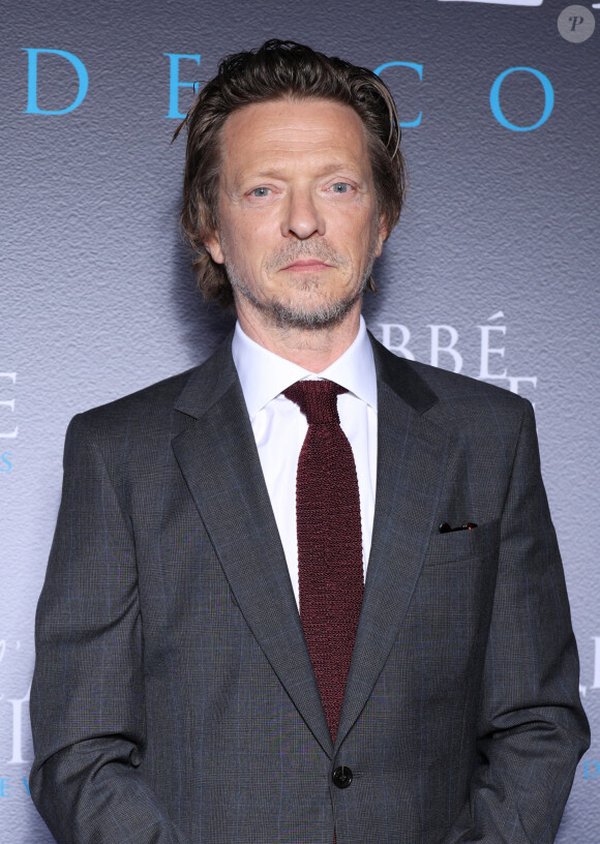
French director and screenwriter trained as an assistant alongside Élie Chouraqui in the 1990s, after a career in advertising and as a DJ. He directed his first feature in 2014 with L'Affaire SK1 (Raphaël Personnaz, Nathalie Baye, Olivier Gourmet), the story of the Guy Georges manhunt — two César nominations at the 2016 ceremony (best first film, best adaptation). Followed by Sauver ou périr (2018, Pierre Niney), Goliath (2022, Gilles Lellouche / Pierre Niney / Emmanuelle Bercot, on the Monsanto scandal), and L'Abbé Pierre — Une vie de combats (2023). Occupied studio 12 at no. 34 for his production company (oral tradition).
French director and screenwriter, a major figure in popular French television drama of the 1990s and 2000s. More than fifteen episodes for Docteur Sylvestre, Les Cordier juge et flic, Une femme d'honneur (with Corinne Touzet), Fabien Cosma; some ten standalone TV films including Granny Boom, Le Caprice des cigognes, Un prof en cuisine (which she also wrote). Read full biography →
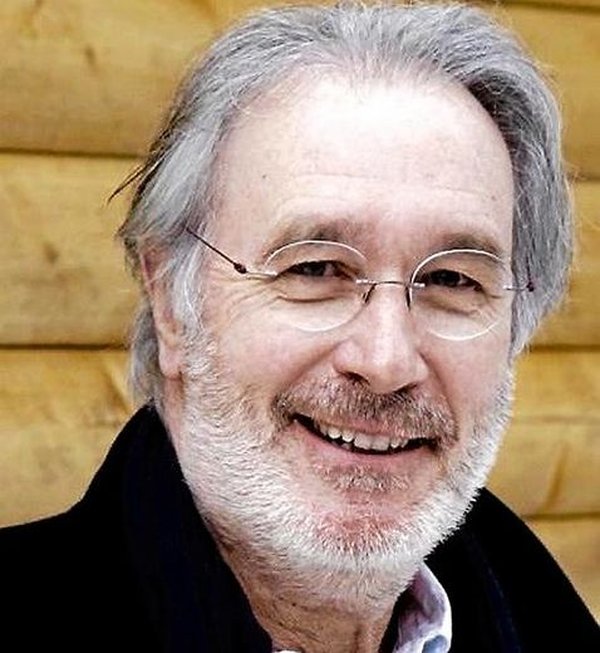
One of the most popular actors in French cinema and television. Debuted in 1966-67 (Les Grandes Vacances), then worked through the 1970s with Sautet (César and Rosalie, 1972), Molinaro, Korber, Deray, Enrico. From 1990: Pialat (Van Gogh, 1991, first César nomination), Chabrol (The Flower of Evil), Haneke (Caché), Carion (Joyeux Noël), Durringer (The Conquest, 2011, as Jacques Chirac), Costa-Gavras (Capital). César for Best Supporting Actor in 2002 for Se souvenir des belles choses. Cult series: Une famille formidable.
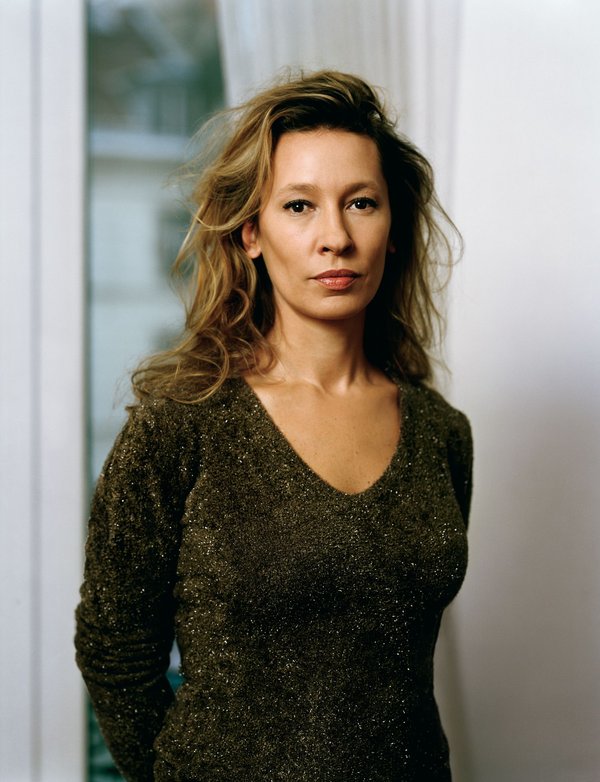
Filmmaker born in Paris in 1967, daughter of the surgeon Michel Bercot and granddaughter of Pierre Bercot (CEO of Citroën, 1958-1970). Films presented at Cannes, Venice, Berlin: Clément (Un Certain Regard Prize 2001), Backstage, Elle s'en va (with Catherine Deneuve), La Tête haute (opening of the 2015 Cannes Festival), La Fille de Brest, De son vivant. As actress: Best Actress prize at Cannes for Maïwenn's Mon roi (2015). César for Best Actress in 2016.
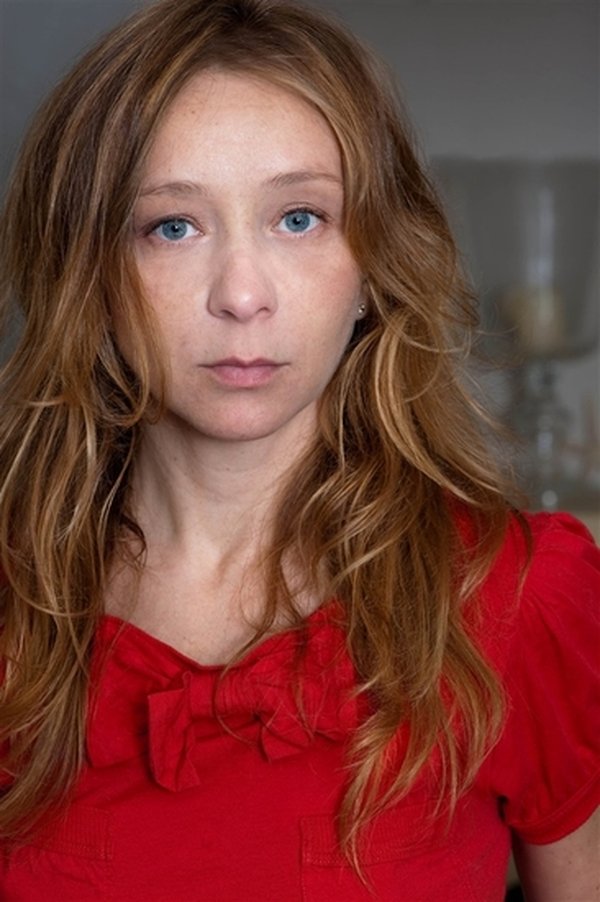
Trained at the Conservatoire national supérieur d'art dramatique. Revealed by Karnaval (Th. Vincent, 1999), she won the César for Most Promising Actress in 2001 for Murderous Maids by Jean-Paul Denis, then the César for Best Actress in 2004 for Fear and Trembling by Alain Corneau. She plays Mômone in Olivier Dahan's La Vie en rose (2007). As a novelist, she published Il n'y a pas beaucoup d'étoiles ce soir at Pauvert (2003) then with Fayard Le Ciel t'aidera (2005), Gamines (2006) and C'est le métier qui rentre (2014). In one of her books she draws a fictional portrait of Magguy, the building's concierge, to whom she lends a drinking habit — pure literary fiction, the real Magguy never drank a drop of alcohol. President of the SACD since 2020.
A couple of journalists — Philippe Bodio trained at AFP; Véronique Pellerin journalist at France Culture, co-author of Sur mes quatre jambes (Robert Laffont, 2005), the autobiographical account of Bernadette Soubeyran which inspired Denis Dercourt's film En équilibre (2015, with Albert Dupontel and Cécile de France). They occupied two studios in the back courtyard of n°34 before letting them out and finally selling them in 2025.
Born May 1961. Graduate of the École nationale supérieure d'architecture in Strasbourg and of the Domus Academy in Milan (industrial design). Awarded the Villa Médicis hors les murs prize in 1995. Former collaborator with the Jean Nouvel and AREP (Duthilleul/Tricaud) agencies. Notable projects include the interior design of the Cité du Vin de Bordeaux (XTU Architects, 2016) — museum shop, bars, cellar housing 14,000 bottles, panoramic restaurant. Co-founder in 2005 of the art-science collective Labofactory (with Jean-Marc Chomaz and François-Eudes Chanfrault). Doctorate in art and science (Sorbonne, 2021), researcher at the Carnot Laboratory of Burgundy (CNRS).
Interior architect and founder of Studio Carré — an independent agency founded in 2023, which had its studio at 34 boulevard de Clichy, "a studio set in a country lane at the foot of Montmartre", before moving elsewhere. Trained within major Parisian firms where he led several large-scale projects on Parisian buildings (covering aesthetic, technical and functional aspects), Paul Levaillant has developed a practice nourished by the antique workshops of Ménilmontant — combining old and contemporary furniture, with bespoke, local and responsible craftsmanship. The studio works in collaboration with Guillaume Pinard and is part of the Créateurs d'intérieur collective. Three areas of work: residential, boutiques, restaurants — between Paris and Annecy. Projects published in Sloft Magazine and Yellowtrace. Official site: carre-studio.fr.
Cinema — production companies
Interior architect, founder of Atelier GMD in 2013. The studio, originally based in Pigalle at 34 boulevard de Clichy, began with the design and execution of apartments and houses for private clients, before expanding to public-facing venues — shops, restaurants, bars, concept-stores, hotels. A sustainable approach favouring raw materials (wood, stone, metal). Notable projects: the AIRTRIX complex in Farébersviller (Moselle, France's largest indoor fun park, 7,000 sqm); the restaurants Monsieur Mouette, Gigio and Tiger Club in Hossegor with Clément Bourdallé and Clément Rigot; the Sanguinet Auditorium (224 seats) with Luc Perrier and Tetraktys Atelier. Trained at EFET, diploma jury at ESAIL Lyon in 2020.
§ 05 — In conclusion
No. 34 in the ecosystem of Montmartre's artists' colonies
If 34 boulevard de Clichy has sheltered, for one hundred and sixty-two years, a painter from the Reichshoffen cycle, the author of The Internationale, a macabre cabaret, a Senator of Madagascar and a Czech painter, it is because it belongs to a wider history: that of the collective schemes invented in Paris from the early 20th century onwards, to prevent property speculation from driving artists out of the neighbourhood that first welcomed them.
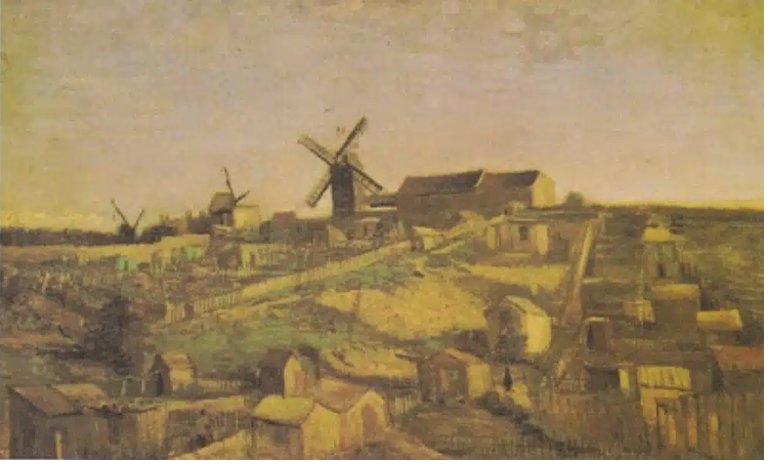
When Vincent van Gogh settled in Montmartre in 1886, with his brother Theo on rue Lepic, the Butte was still almost rural: windmills, market gardens and vacant lots covered its slopes, which he painted tirelessly. It is that Montmartre — village-like, dotted with windmills — that property speculation would swallow up within a generation. The artists' colonies were born precisely of this shift: to preserve, at the heart of a district growing denser and more expensive, places where artists could still live and work. No. 34 boulevard de Clichy belongs to this history — not as an official scheme, but as a hidden artists' colony, whose back-courtyard studios quietly perpetuate, to this day, the spirit of old Montmartre.
1900-1924 — the end of bohemian Montmartre
At the beginning of the 20th century, Montmartre lost its bohemian character: rents rose, speculators bought up land and old studios. Artists' colonies — such as the Cité Montmartre-aux-Artistes or La Ruche — emerged as collective responses to maintain an artistic presence in the neighbourhood, guaranteeing modest rents and spaces suited to work (north-facing skylights, ceiling height, mezzanines).
In 1924, a municipal councillor of the 18th, Jean Varenne, proposed using a piece of land — the rue Ordener "maquis" — to build affordable studios for low-income artists. A group of artists led by the sculptor Louis-Aimé Lejeune set up an affordable housing company called "Montmartre aux artistes". The City of Paris provided the land and a financial guarantee. The complex opened on rue Ordener, less than a kilometre from no. 34. In 1936, the Public HBM Office — today Paris Habitat — took over management.
CITÉ MONTMARTRE-AUX-ARTISTES AT A GLANCE
189 rue Ordener, Paris 18th — the largest artists' colony in Europe, with about 177 studios originally (180 today). Founded in 1924-1932 on the former "maquis", it aims to protect modest artists against gentrification and speculation that have been driving painters and sculptors out of Montmartre since the late 19th century.
No. 34 boulevard de Clichy, another model — private cohabitation
No. 34 does not belong to this public scheme. It is a private condominium whose studios were formed by sedimentation — an attic converted here, a courtyard built up there, a cabaret stage turned into a painter's studio. But it shares the same movement: a neighbourhood that since the 1860s has accepted to host simultaneously café-concerts, themed cabarets, song publishers, sculptors, humorists, photographers and filmmakers — and that still does so today.
1952 — the division of the building into a condominium
Before its division, the building had a chain of ownership going back to the late 19th century. It belonged to the Parisian publisher-bookseller Henri Justin Édouard Dentu, head of one of the great publishing houses of the Second Empire and the Third Republic, who had acquired it at auction in 1880. Ownership then passed to his heirs, among them his daughter Mélanie Dentu, wife of Philippe de la Borie de la Batut, a barrister at the Paris Court of Appeal. An 1885 partition sale divided the building between the de la Borie de la Batut and Hons Olivier branches, to which the Doquin de Saint-Preux branch — settled in Maracaibo, Venezuela — was later added by marriage.
No. 34 boulevard de Clichy passed from family joint ownership to a condominium on 14 June 1952, through a co-ownership regulation and a descriptive statement of division drawn up by Maître Jean Popelin, a Paris notary (164 rue du Faubourg Saint-Honoré), later amended in 1954 and 1962. These three families, who had remained in joint ownership for almost seventy years, then decided to sell the building as separate units: it was divided into fifty-six lots — apartments on the upper floors, ground-floor shops, and the series of sixteen artists' studios spread between the first courtyard and the rear courtyard. It is within this shift that Alcide Liotard arrives, moving that very year into studio no. 16, where he would live and paint until 1973.
Today — practical schemes for artists in Montmartre
Paris offers several concrete schemes for artists in Montmartre, even though property pressure remains very strong.
▸ Cité Montmartre-aux-Artistes (189 rue Ordener, 18th)
- Still the largest artists' colony in Europe — about 180 studio-dwellings.
- Managed by Paris Habitat (City of Paris social landlord).
- Access reserved primarily for artists registered with the Maison des Artistes (mandatory affiliation) and to persons on modest incomes; files reviewed by a committee.
- Moderate rents — around €550-800 according to recent testimony.
- Still operates in its original spirit: protecting artists from speculation.
▸ Cité Internationale des Arts — Montmartre site
- Address: 24 rue Norvins, very near place du Tertre.
- Temporary residencies (3 or 6 months) with a furnished studio-dwelling (~50 m²).
- Usually includes a living grant + a production grant.
- Open to artists worldwide through calls for applications — partnerships with the Académie des Beaux-Arts, Art Explora, etc.
- Very active in 2025-2026.
▸ General schemes of the City of Paris
- The City subsidises the construction and renovation of artists' studios (with or without housing), entrusted to social landlords.
- Montmartre and adjacent neighbourhoods (Nouvelle-Athènes, etc.) still benefit from these programmes.
- Paris Habitat manages in total more than 600 studio-dwellings for artists in its portfolio.
A history that continues
This context explains why in 2026, 34 boulevard de Clichy remains an active creative condominium — almost 90 declared professional entities, artists, art craftsmen, architects, film producers, design agencies. The courtyard-studio is neither a museum nor an official residence; it is what Montmartre has stubbornly protected for a century: a place where one can still, in Paris, rent a studio and work in northern light.
§ 06 — Access
Transport & access to the 34
The 34 boulevard de Clichy is very well served: Pigalle station 100 m away (lines 2 and 12), Place de Clichy 640 m away (lines 2 and 13), bus stops 60 m away, Noctilien stations N01 and N02 in immediate proximity.
Metro
Bus & Noctilien
§ 07 — The neighbourhood
Guides to artistic Pigalle and Montmartre
34 boulevard de Clichy does not stand alone. A direct neighbour of the Bouillon Pigalle (no. 22, 100 metres away), the Moulin Rouge (no. 82, 350 metres away) and the Folies Pigalle (200 metres away on place Pigalle), and at the foot of the Butte Montmartre (Sacré-Cœur, Bateau-Lavoir, Dalida), it is part of the dense network of artists' colonies and historic sites of the neighbourhood. Here are our guides to place no. 34 in its context and to plan a visit to artistic Pigalle.
Bouillon Pigalle, Folies Pigalle, Moulin Rouge, the studios of no. 34, Cité Véron: a walking itinerary through artistic Pigalle. Where to eat, where to go out, where to see artists' studios.
The Bateau-Lavoir, La Ruche, the Cité des Fusains, the Cité Véron, 34 boulevard de Clichy. Five Parisian addresses inherited from the golden age of Montmartre, still in use.
All of Picasso's Paris addresses: Bateau-Lavoir, 11 boulevard de Clichy. Disambiguation between no. 34 and no. 11 — two neighbouring but distinct addresses.
A 2-day Paris itinerary for art lovers: Manet at the Musée d'Orsay, 34 boulevard de Clichy, Sacré-Cœur, Moulin Rouge, Bateau-Lavoir, Musée de Montmartre, Dalida's grave.
Frequently asked questions
What is 34 boulevard de Clichy?
34 boulevard de Clichy is a Parisian building in the 18th arrondissement, on the border of Pigalle and lower Montmartre. Built between 1801 and 1850, it shelters in its inner courtyards a set of artists' studios in brick and timber framing, dating from the late 19th century, emblematic of the golden age of Montmartre.
Who lived or worked at 34 boulevard de Clichy?
Over 162 years, n°34 has hosted: Édouard Manet (who painted the Reichshoffen series on the ground floor, 1878-1879), Eugène Pottier (author of The Internationale, studio 1880-1887), painter Paul-Joseph-Victor Dargaud, the Cabaret de l'Enfer then du Néant (1892-c.1950), Henri Marre and his daughter Sébastienne, Pierre-Luc Feitu (Breton sculptor), Hella Guth (Czech painter, 1951-1992), Michel Batlle, and many contemporary artists including Fabrice Minier.
Did Manet really paint at 34 boulevard de Clichy?
Yes. Édouard Manet frequented the Reichshoffen Brasserie, on the ground floor of n°34, where he painted in 1878-1879 his emblematic series of waitresses with beer mugs. The original canvas, cut into two fragments, is now divided between the Musée d'Orsay (Paris) and Kelvingrove Art Gallery (Glasgow).
Did Pottier write The Internationale at 34 boulevard de Clichy?
The text of The Internationale was composed by Eugène Pottier in 1871, during the Paris Commune. But it was at 34 boulevard de Clichy, where he rented a textile-pattern designer's studio after his return from exile (1880-1887), that he completed his Chants révolutionnaires — the volume in which the lyrics of The Internationale were printed for the first time, in 1887.
Can the artists' studios be visited?
No. The building is closed by an entry code and the private courtyard is not accessible to the public. The studios are occupied by current residents and their professional activity. The website 34-boulevard-de-clichy.com is a heritage documentary investigation — not an open tourist site.
§ 08 — Sources
Documentation and archives consulted
This investigation draws on primary sources (cadastral records, POPP censuses 1926-1936, Didot-Bottin directories, building permits) and secondary sources (monographs, artists' dictionaries, academic articles, institutional authority records).
A consolidated nominal table of the historical residents of 34 boulevard de Clichy, compiled from the three Paris censuses held at the Archives de Paris (references D2M8 296, 441, 679) and the POPP database. ~70 individuals, ~50 households, including the Jolivet de Colomby family.
Main sources
- Archives de Paris — cadastre (reference DQ18), dating of the building (1801-1850); POPP censuses 1926 and 1936; building permits
- Paris révolutionnaire — entry on Eugène Pottier's studio at no. 34 (CACP reference p. 441)
- Revue 1895 — Nathaniel Greene, « Autour du Néant : Dorville et l'invention du cabaret macabre », no. 96, 2022
- W. C. Morrow, Bohemian Paris of To-day, 1899 — Internet Archive; Mel Gordon, Theatre of Fear & Horror (macabre cabarets)
- André Roussard, Dictionnaire des Peintres à Montmartre, Éditions Roussard, 1999 — entries Dargaud, Marre, Feitu
- sculpteur-feitu.fr — official website run by the Feitu family
- INHA — Agorha, authority records for Pierre Feitu and Henri Marre
- Gilles Walusinski, « Eugène », délibéré magazine, 25 July 2018 — autobiographical account of studio 5 in 1969-1970
- Wikipédia — Hella Guth · Galerie Ballesteros · Bertrand Cayeux website — concordant sources on Hella Guth at no. 34
- Musée Carnavalet — Paris Musées Collections, which holds works by Dargaud and items from the Cabaret du Néant
- BHVP — Bibliothèque historique de la Ville de Paris, Actualités collection, Riester and Coq d'Or advertising cards
- Musée Ingres-Bourdelle (Montauban) · Musée Paul-Dupuy (Toulouse) — works by Henri Marre
- Parc culturel de Rentilly — exhibition Le Cabaret du Néant, 2020 (with the Frac Île-de-France)
- Musée d'Orsay and Kelvingrove Art Gallery, Glasgow — fragments of Manet's Reichshoffen cycle
- Paris-Promeneurs and Paris-bise-art (article of 26 February 2021) — photographic documentation of the courtyard studios
- Cinema Treasures — entry no. 36830 for the Scarlett: confirms the architect Julien Hirsch and the Streamline Moderne style
- Atlas de l'architecture et du patrimoine de Seine-Saint-Denis — entry on Julien Hirsch, architect E.P.Z.; and his 1935 monograph (BnF, Cabinet des estampes)
- Wikipédia — Charles Gir, Jeanne Fusier-Gir, François Gir; Mairie de Grisy-les-Plâtres — biographies of the Gir family written by Charles Girard (grandson)