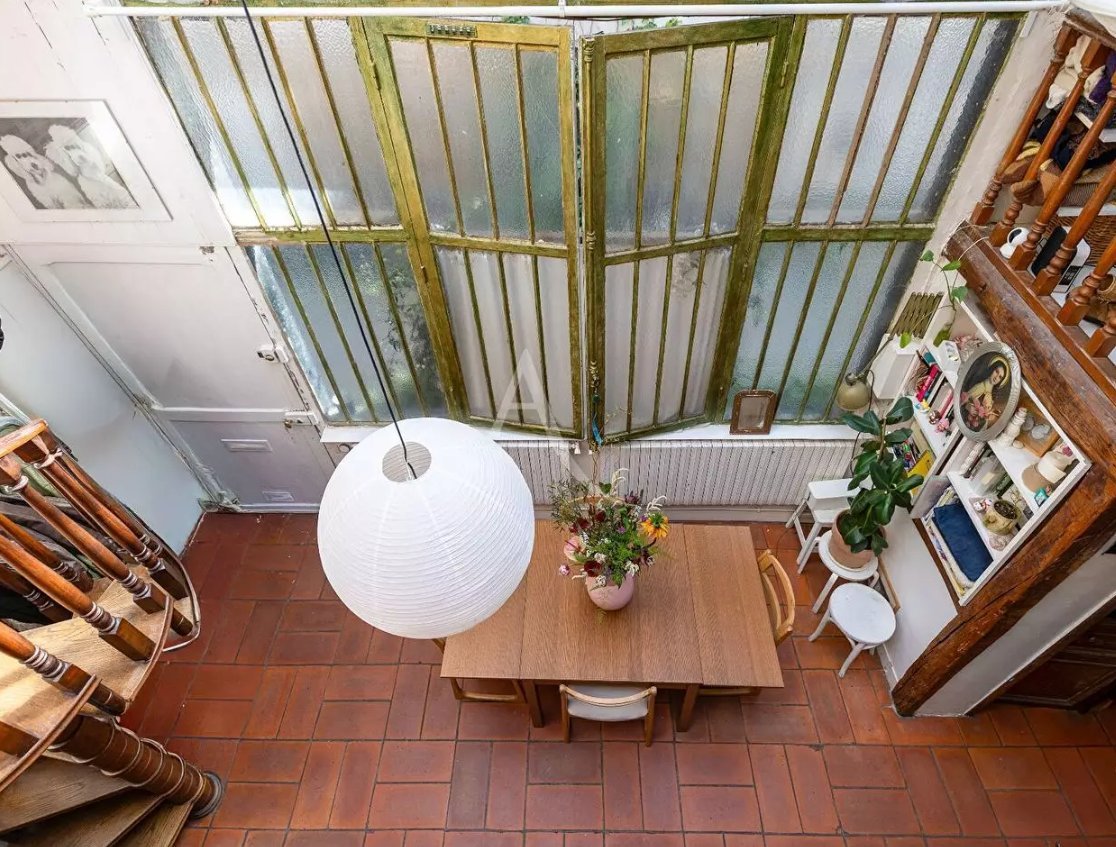
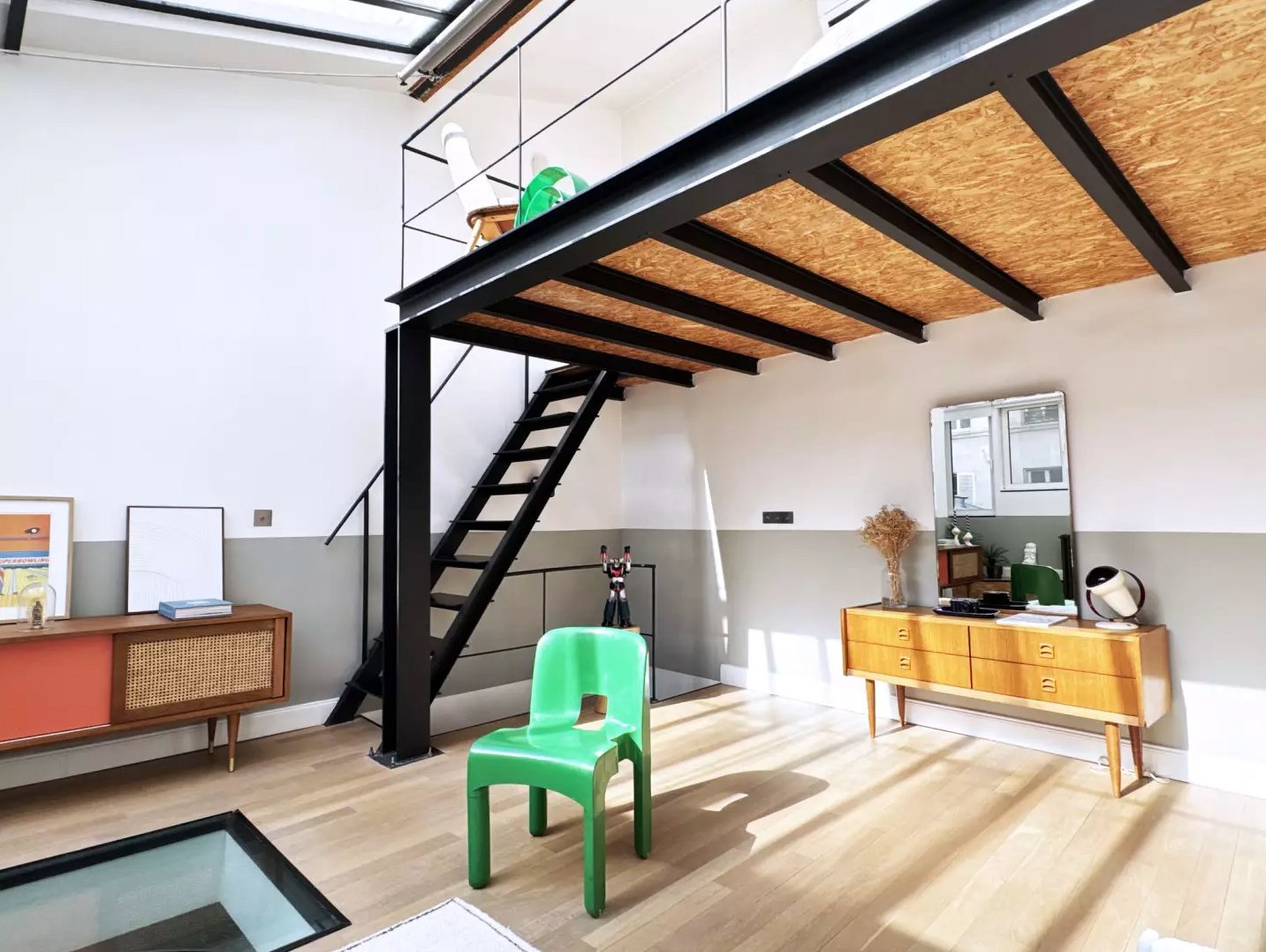
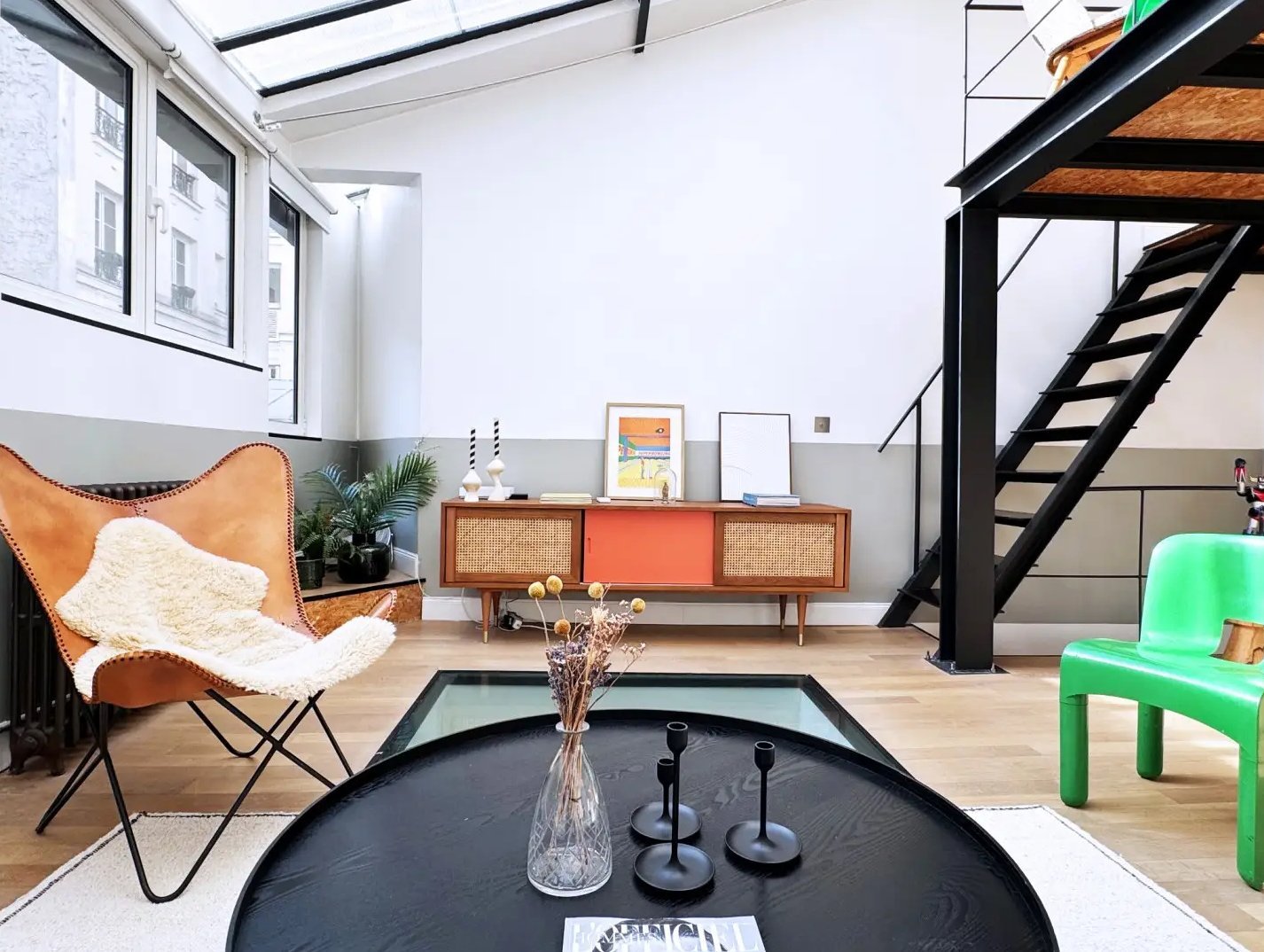
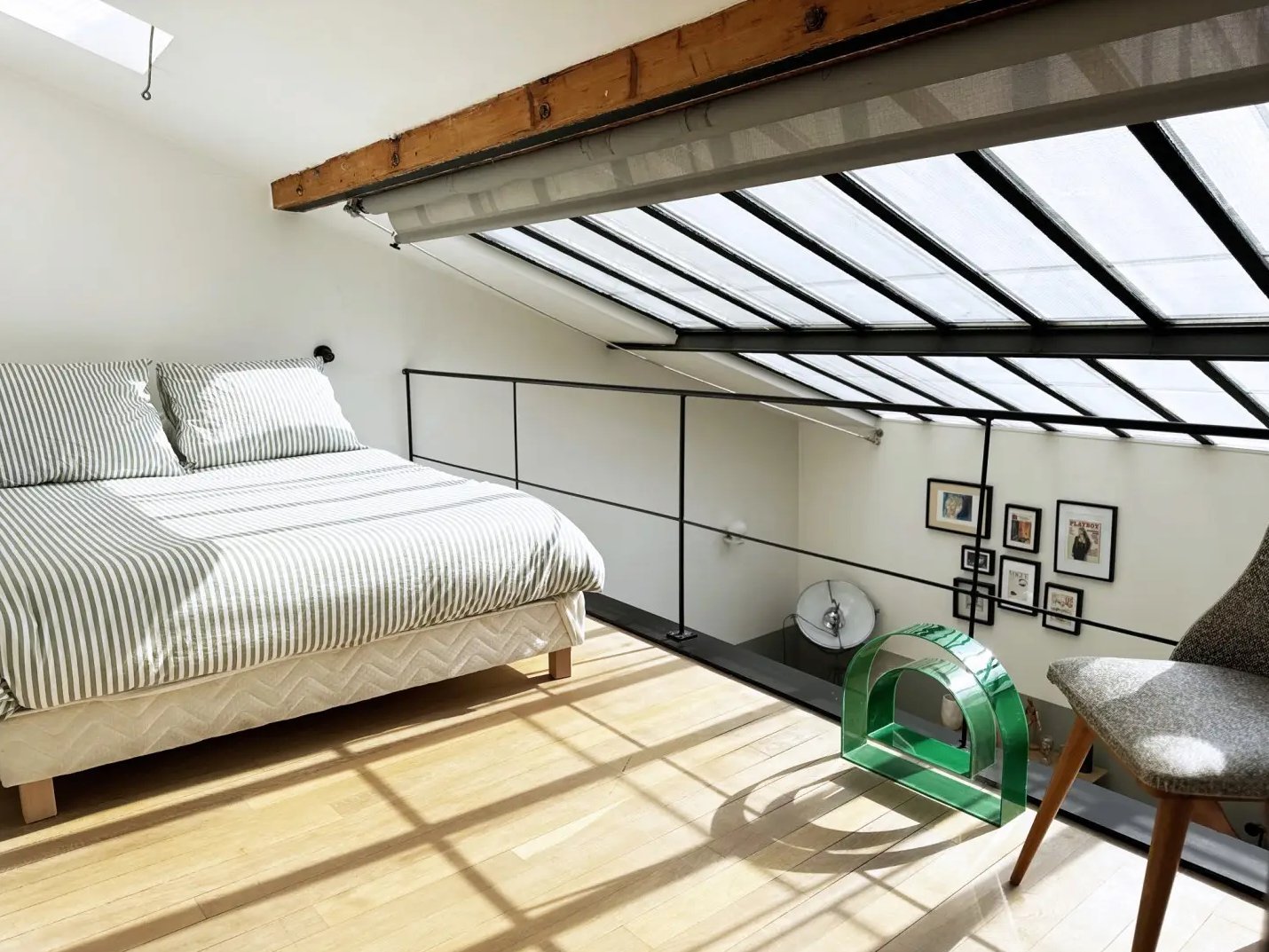
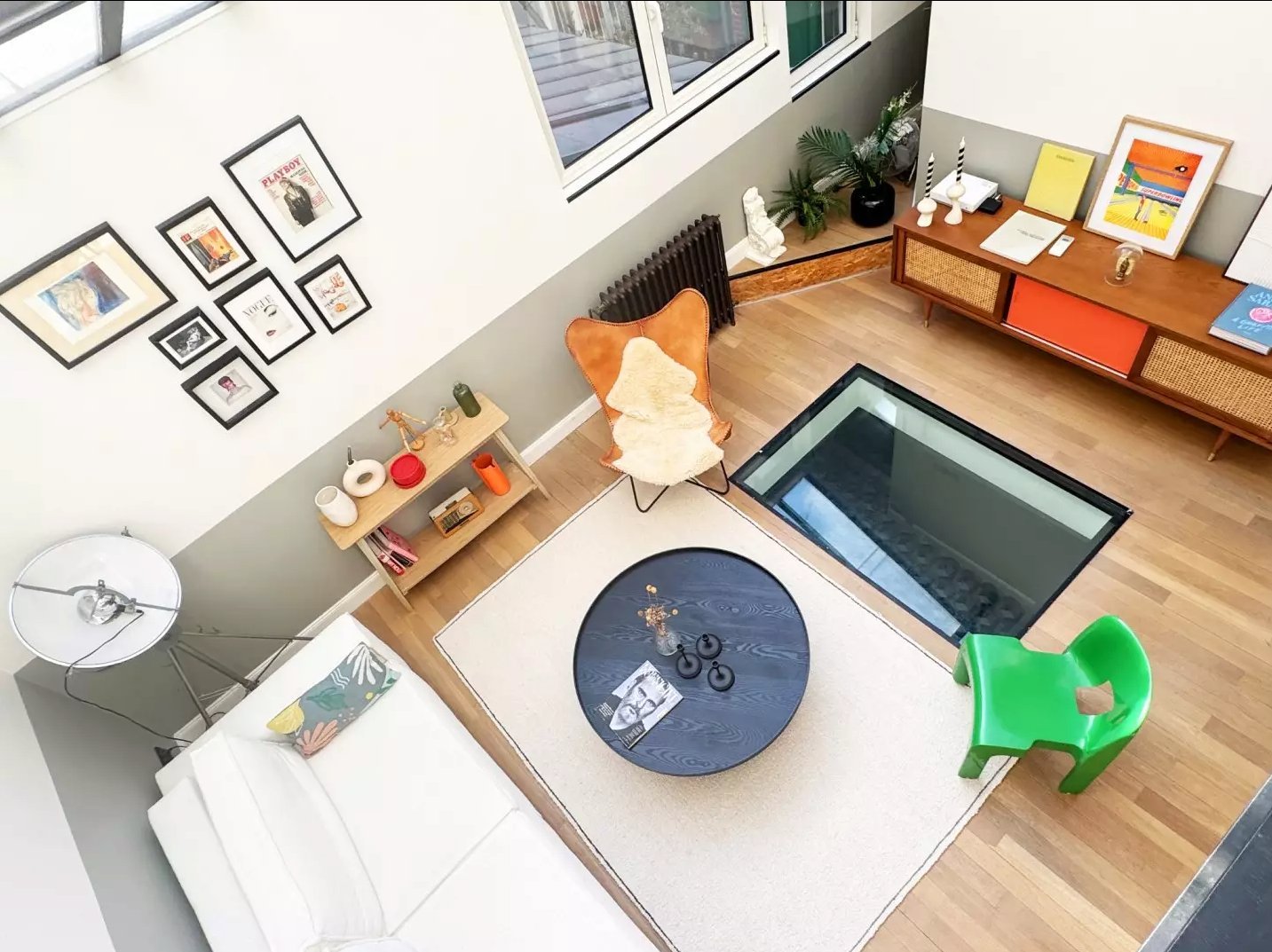
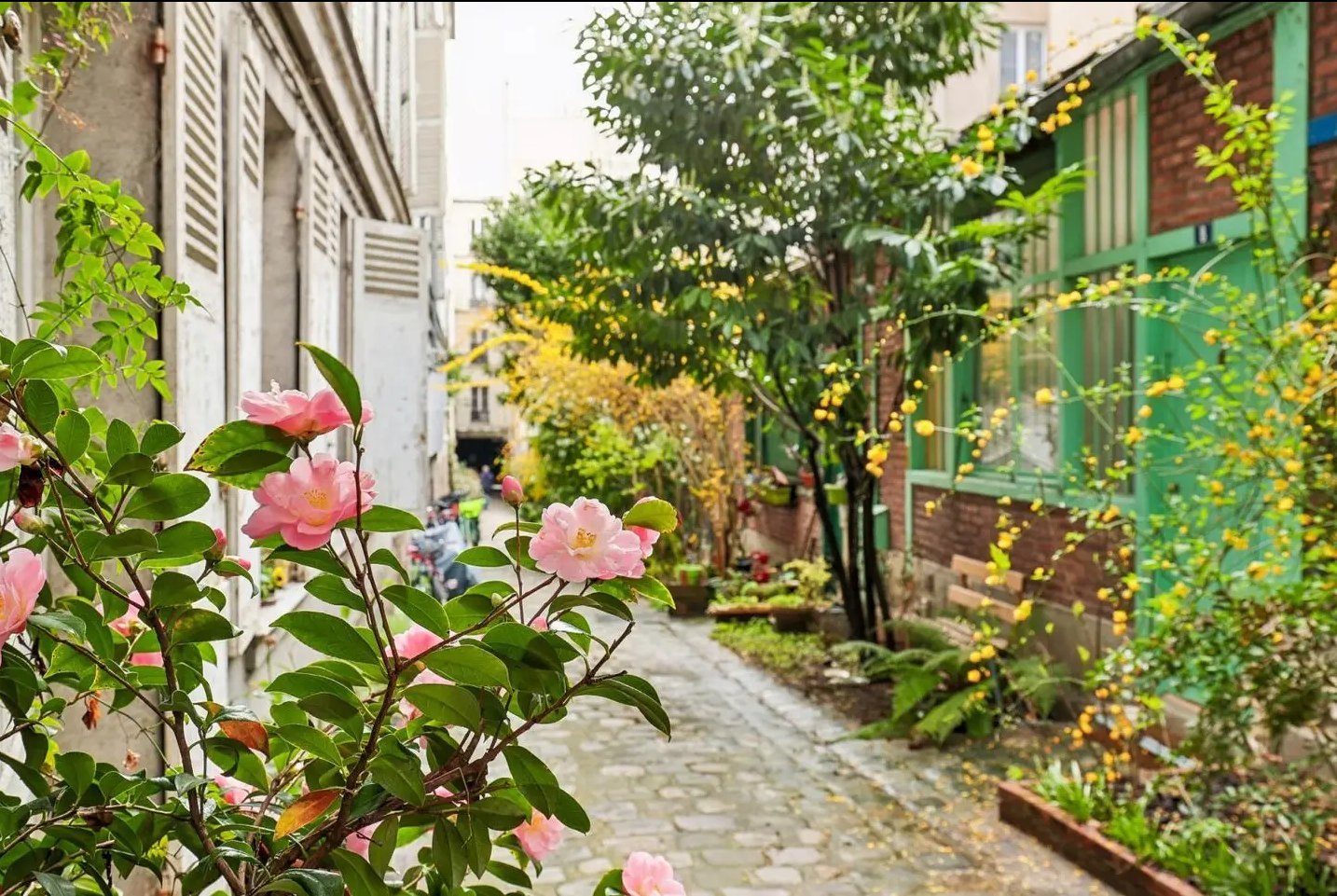
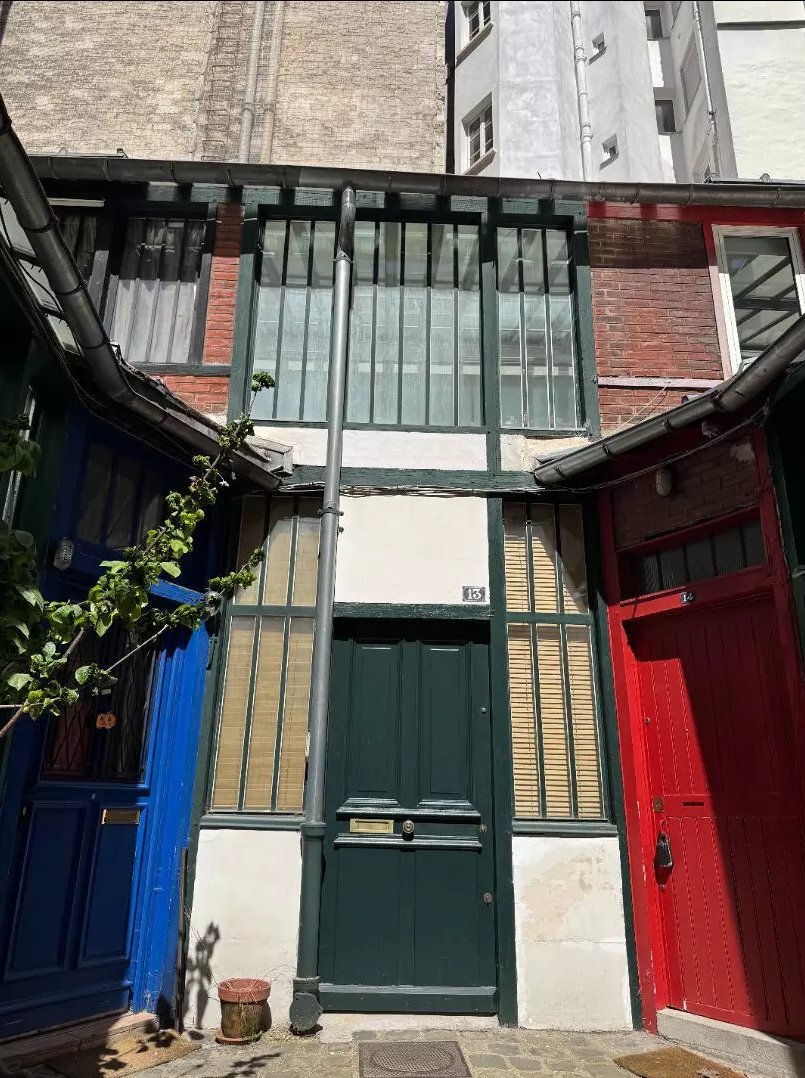
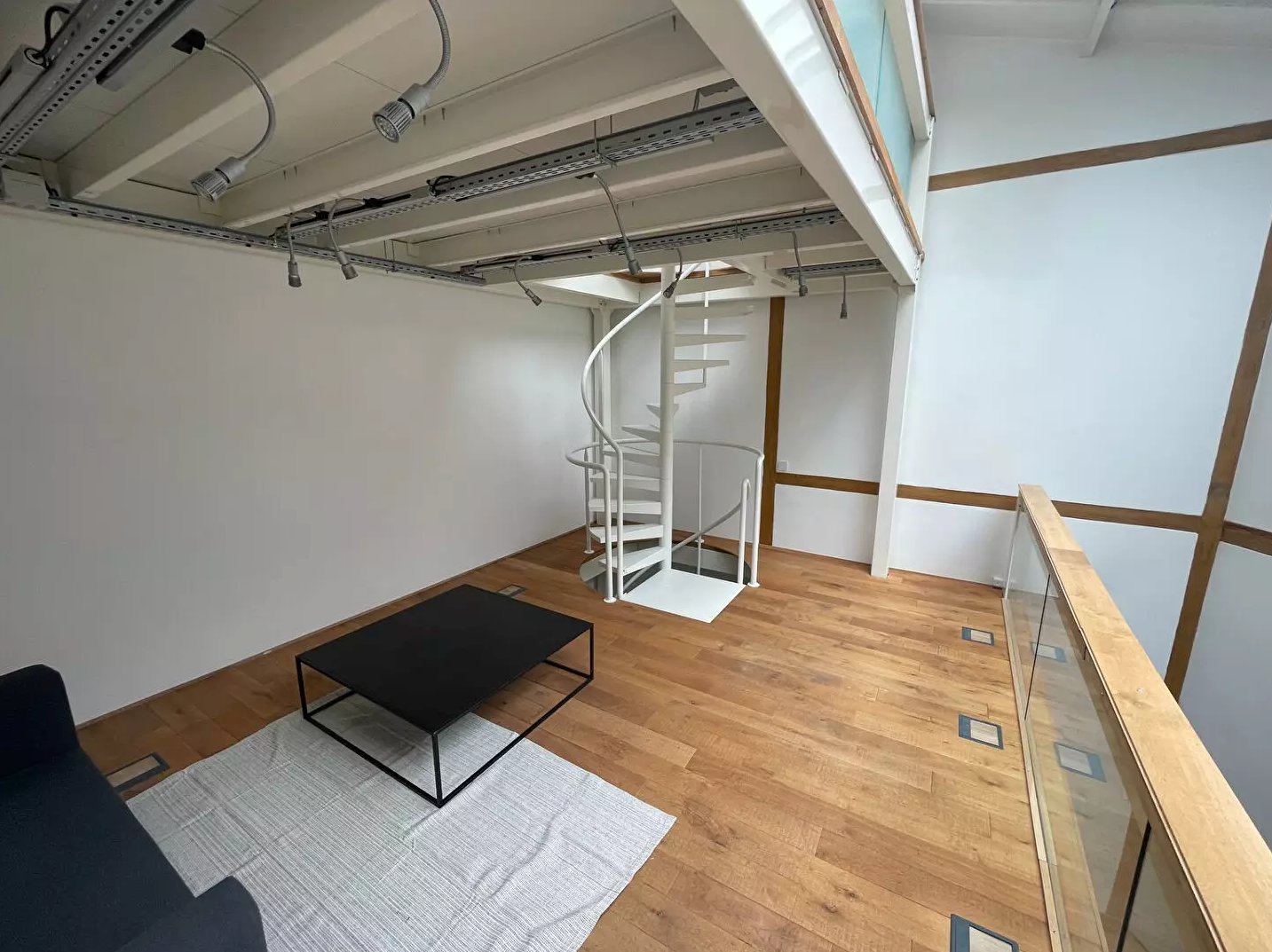
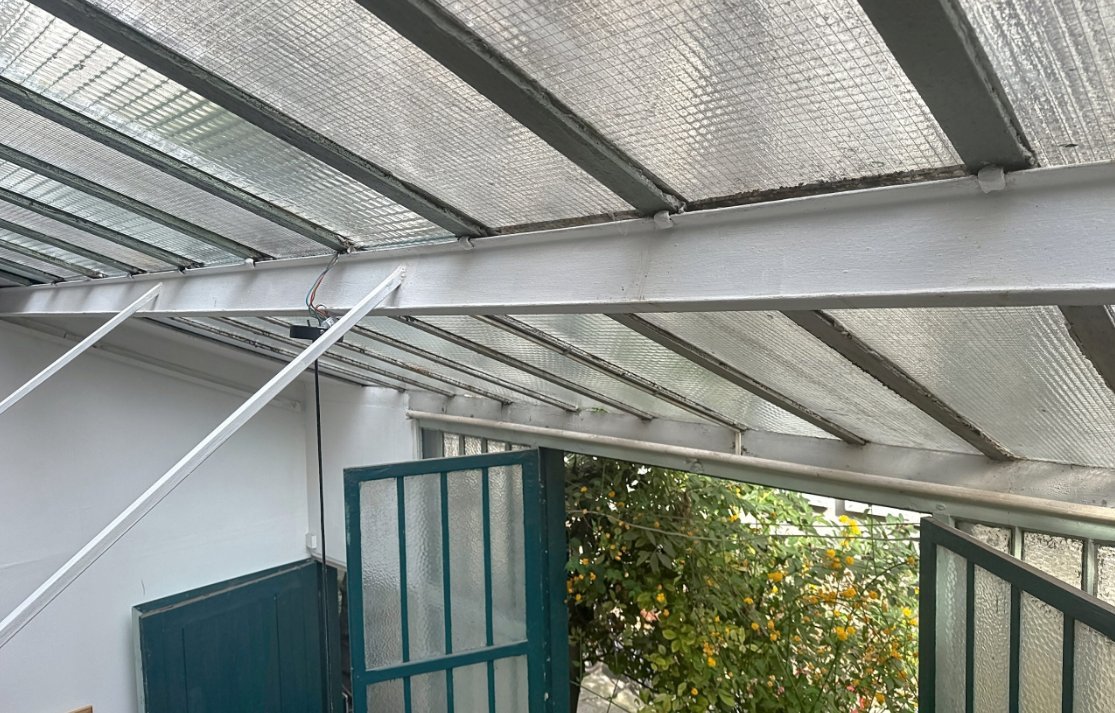
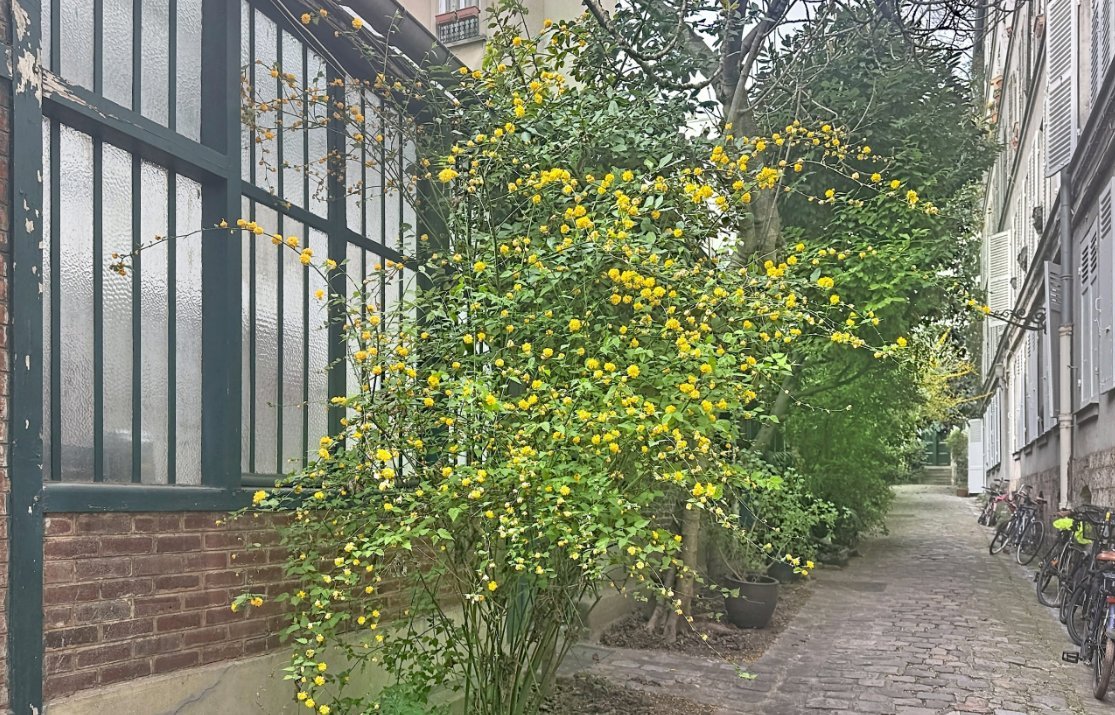
34 boulevard de Clichy belongs to a Parisian tradition born in the 19th century: the artists' colonies, those clusters of studios designed to meet the very specific needs of painters, sculptors, engravers and photographers — constant north light, sufficient ceiling height for large canvases or monumental sculptures, direct access from the street or courtyard for bringing in models and materials. The gallery below brings together views of contemporary Parisian studios that still preserve their original characteristics intact: metal-framed skylight, exposed timber framing, spiral staircase serving the sleeping mezzanine, terracotta tile floor, and planted paved courtyard.
Gallery
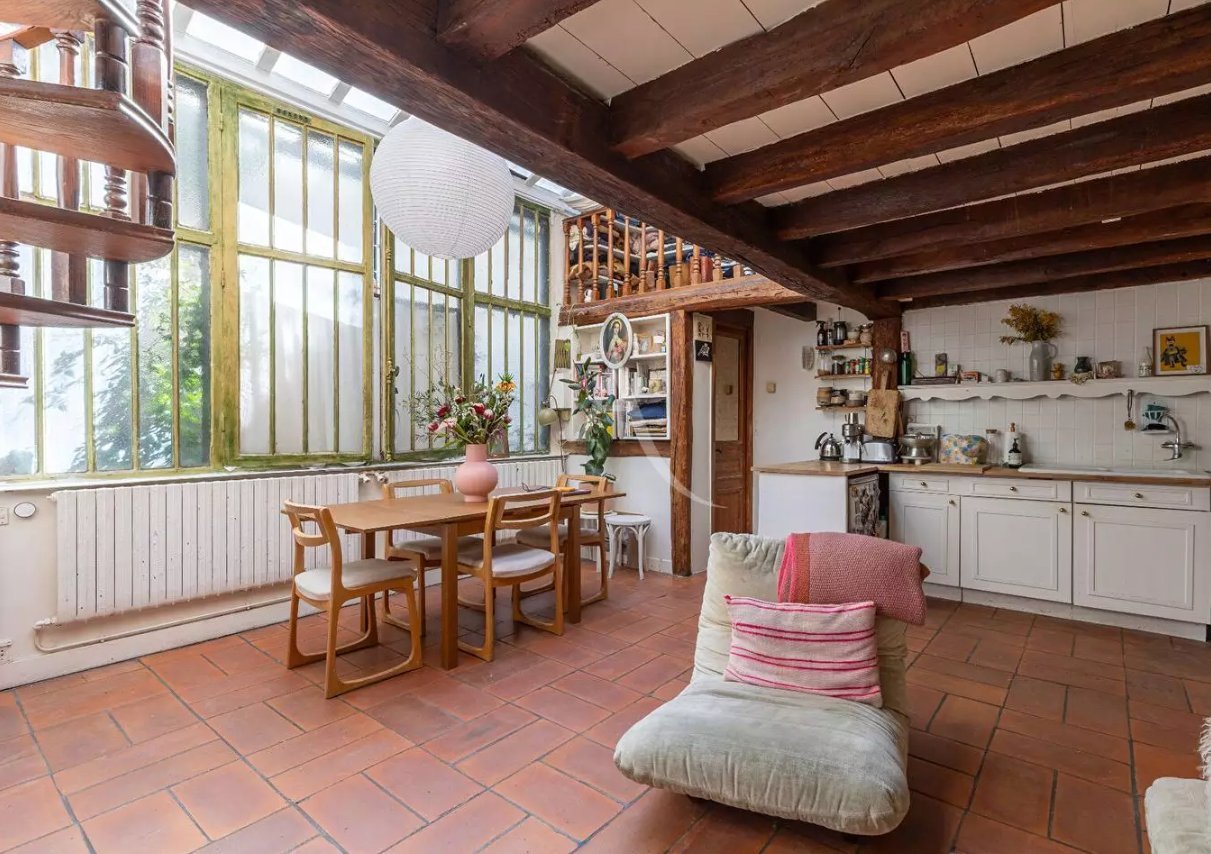
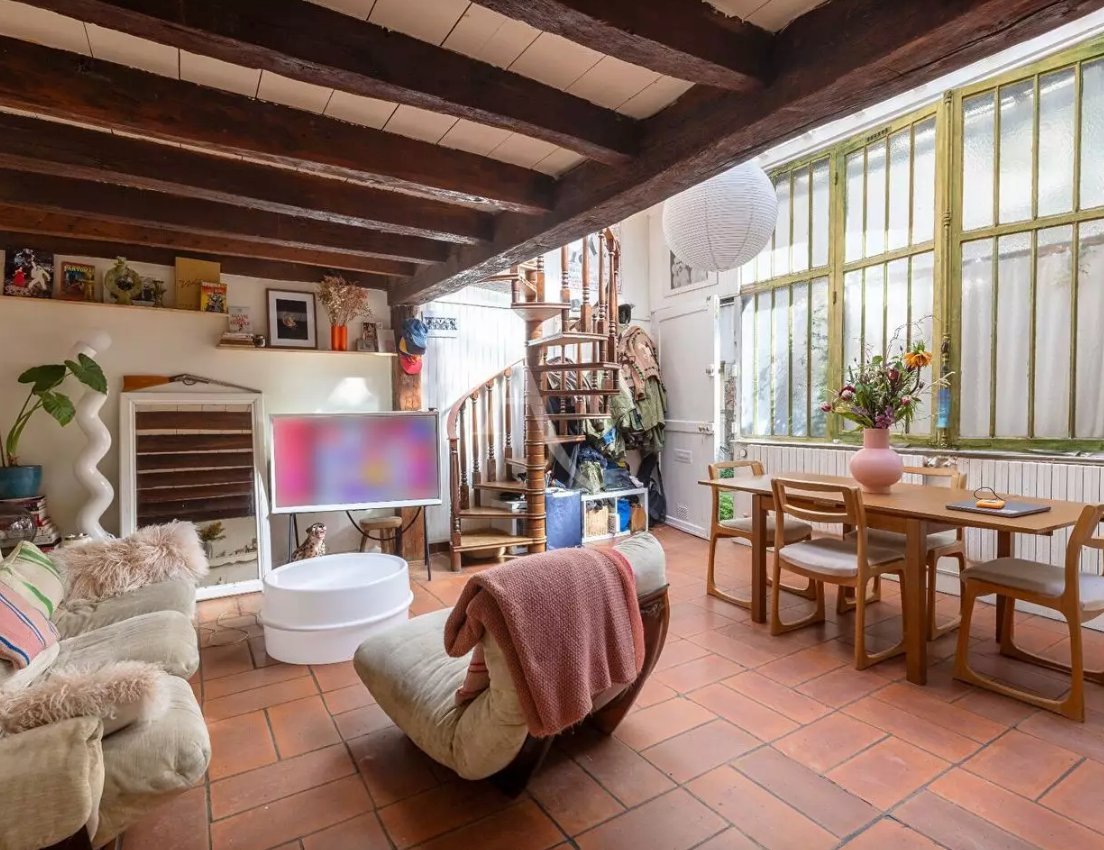
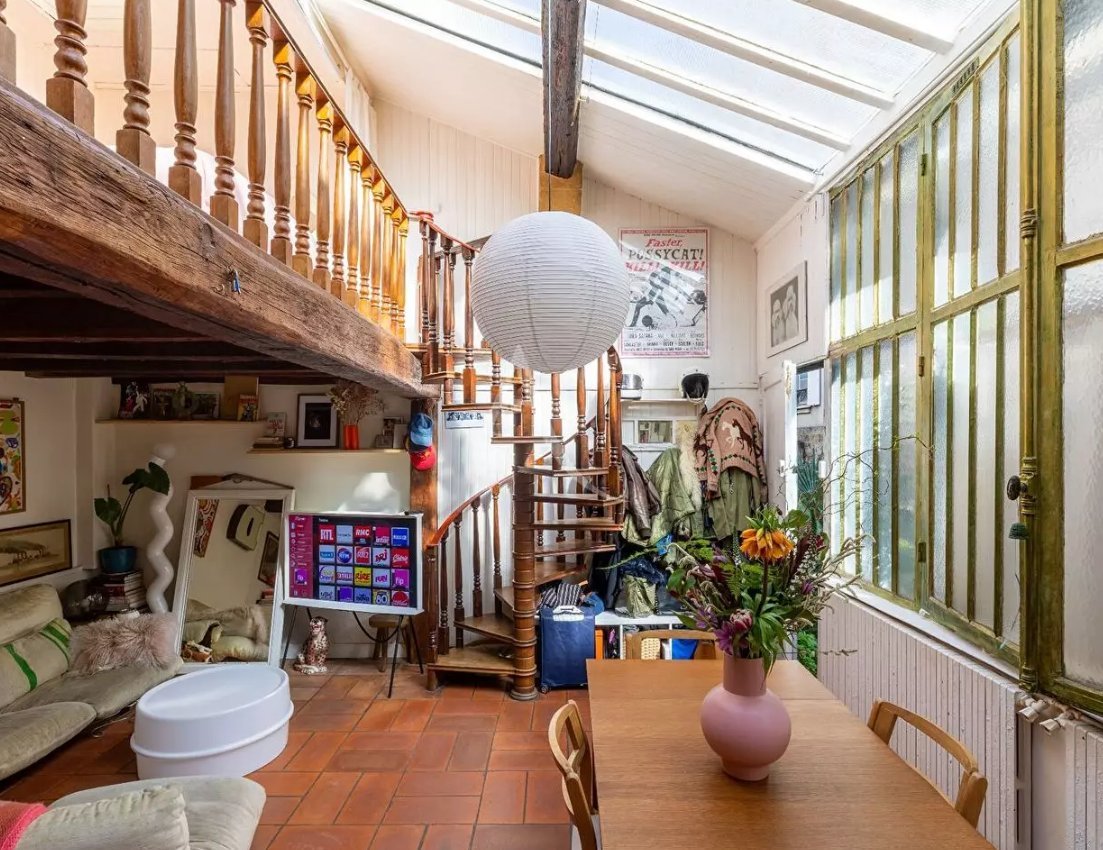
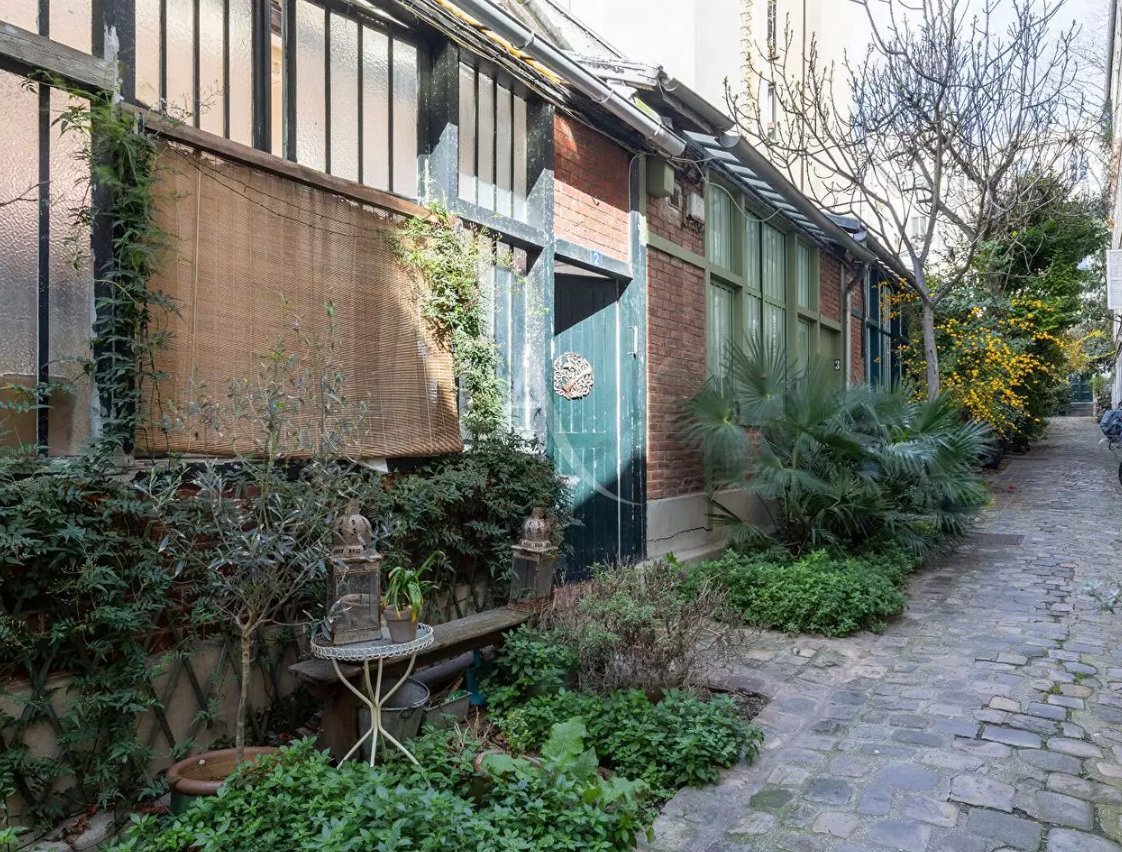
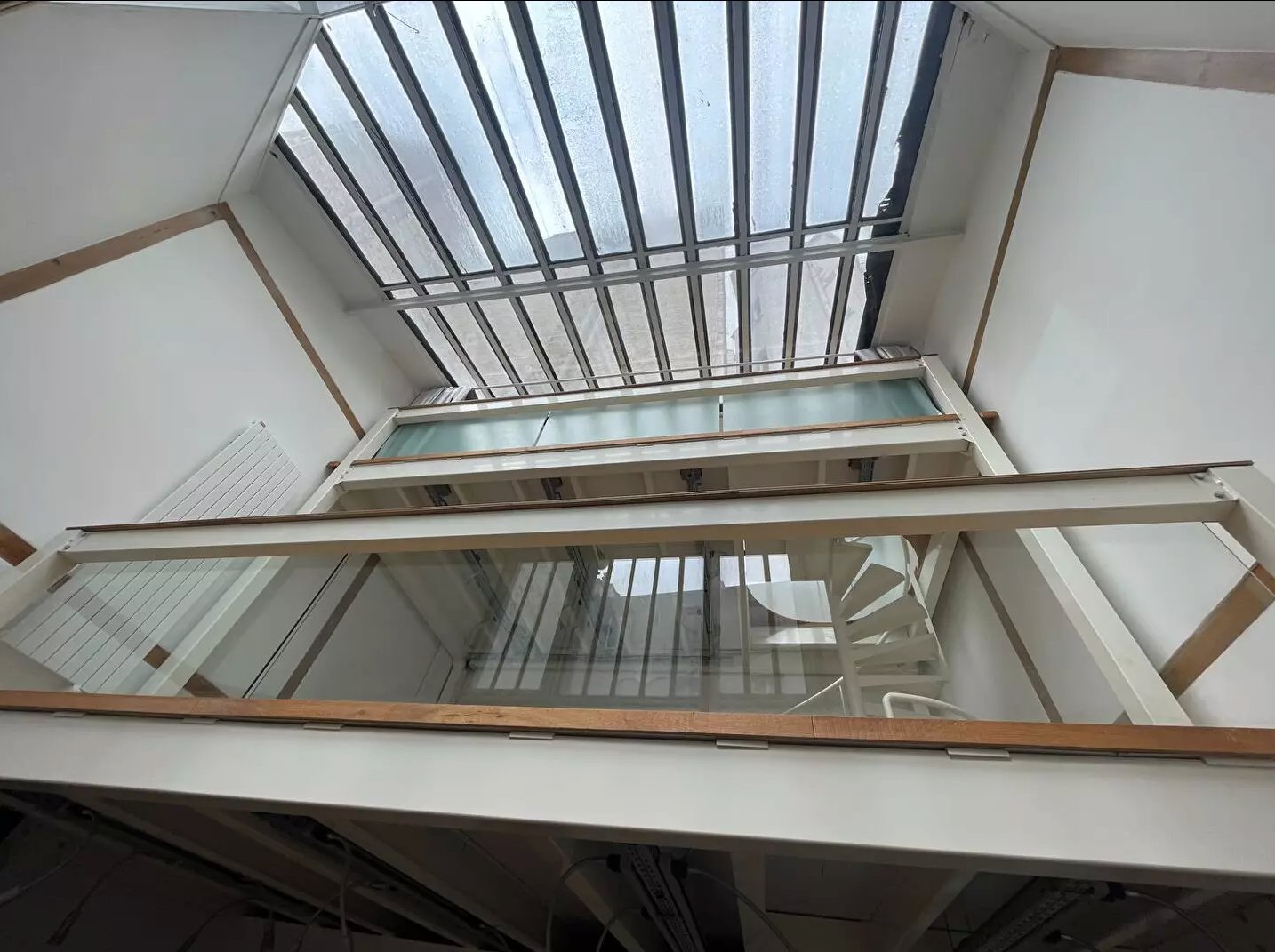
Studio 4 — Michel Batlle (Toulouse lineage)
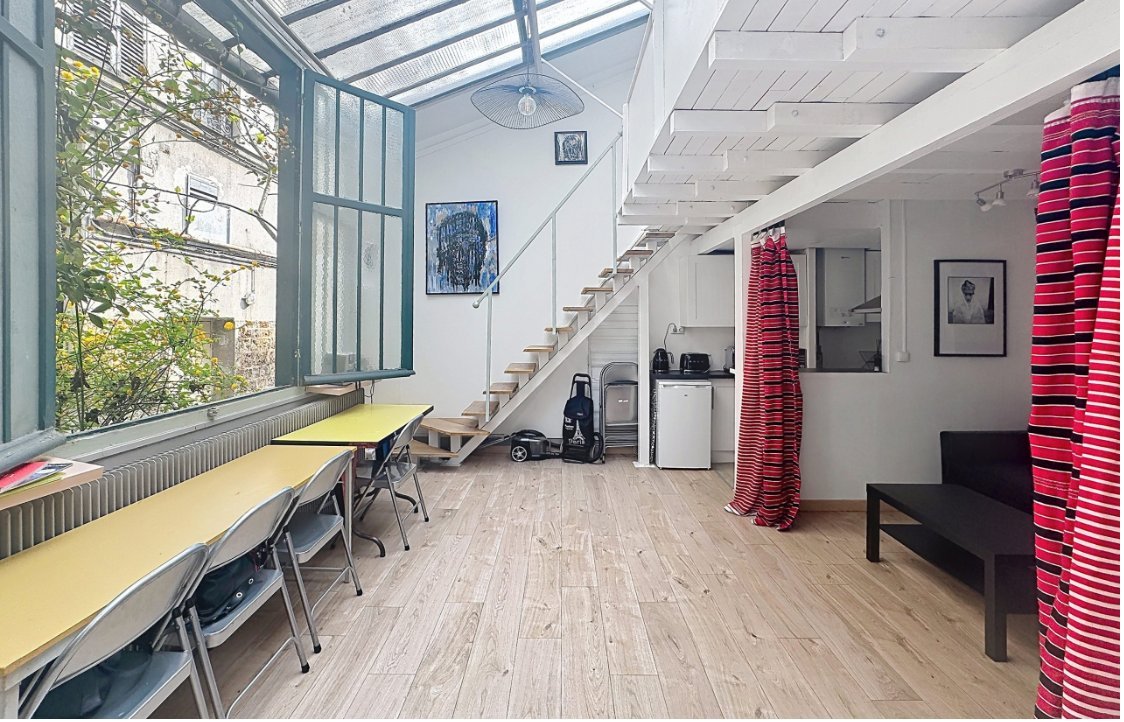
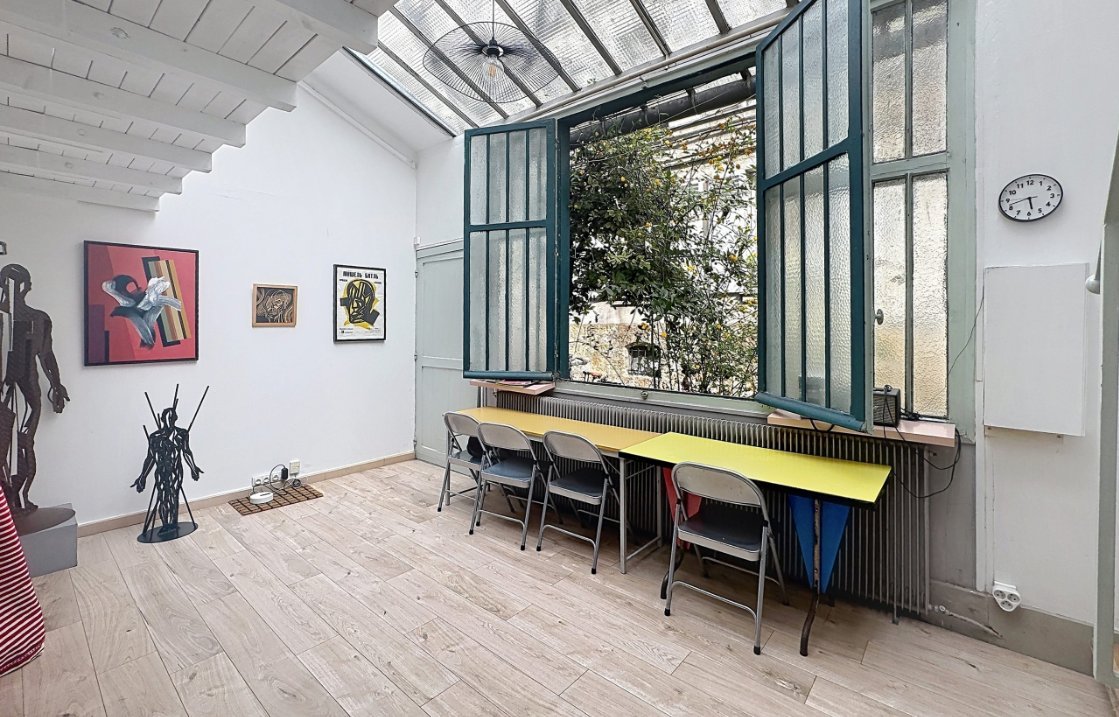
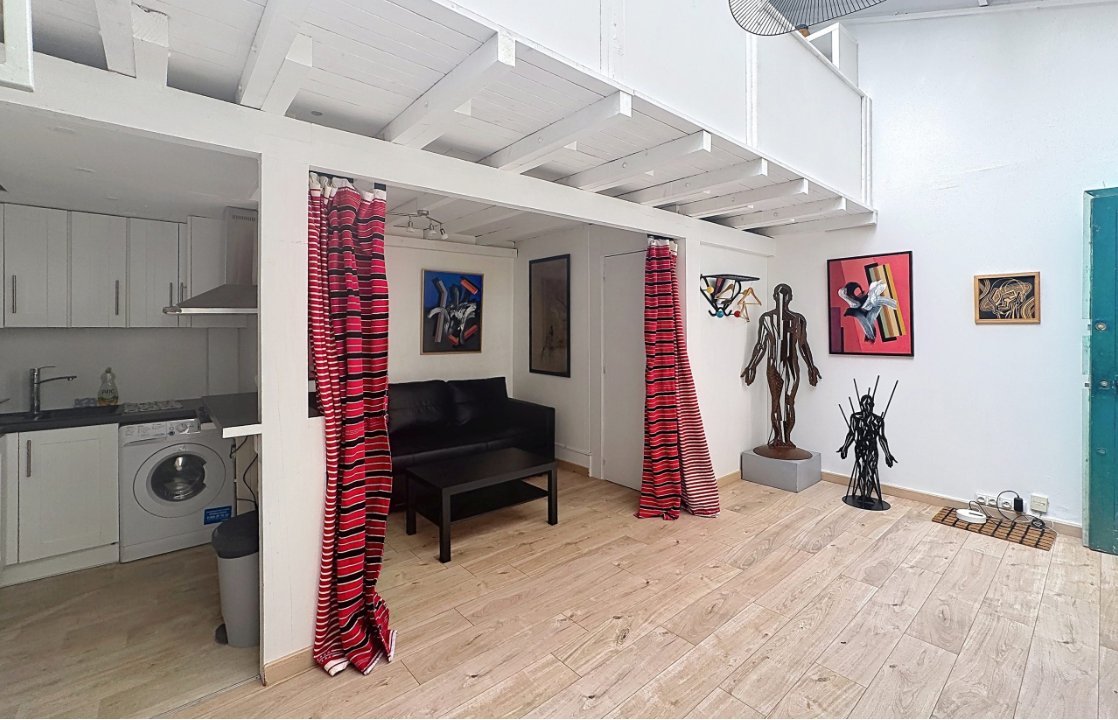
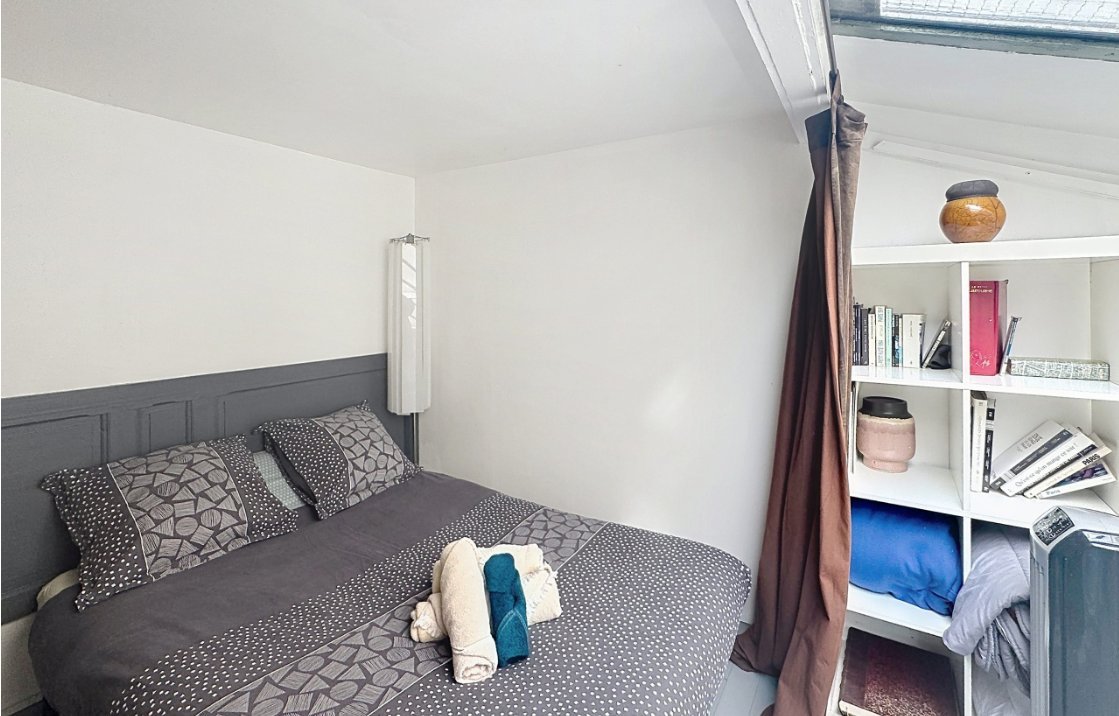
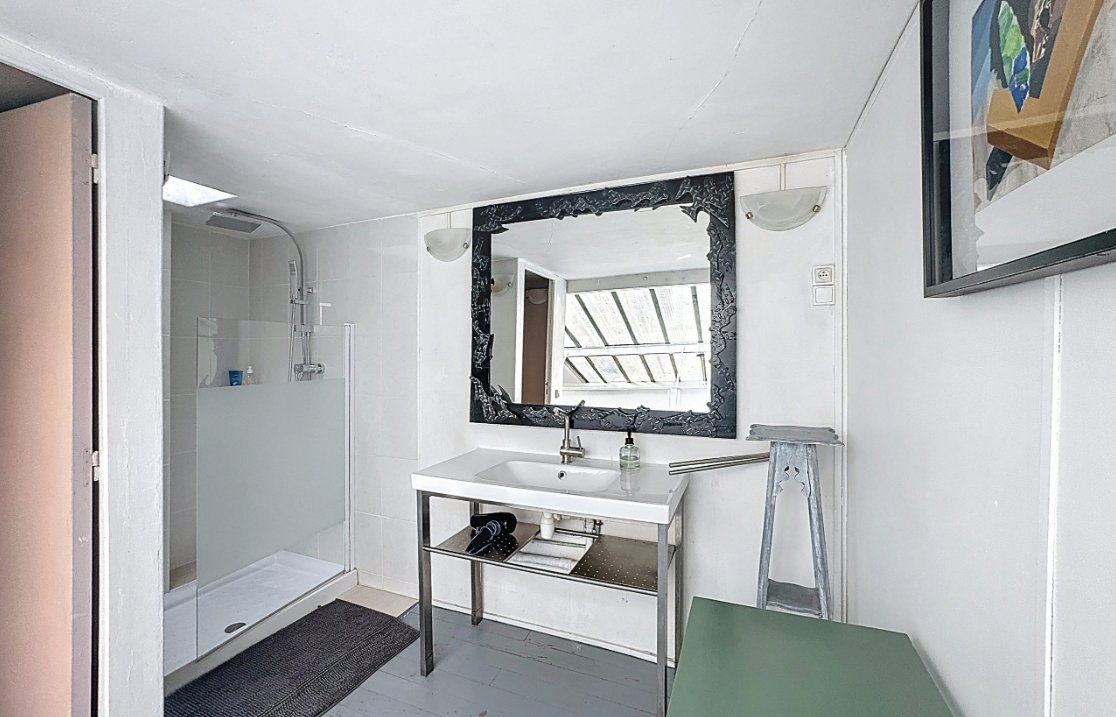
Studio 4 of no. 34, which successively housed Henri Marre (1858-1927), his daughter Sébastienne Marre and then Michel Batlle (b. 1946 in Toulouse, painter and sculptor, French pioneer of Body Art) — that is, almost a century of Toulouse art in the same room. Seven views of the studio from the time when Batlle occupied it, populated with his works.
Cross-cutting reading
A few constants run through all these views. The studio skylight first — often with a slender metal structure painted green or grey, sometimes with frosted cathedral glazing to diffuse the light without dazzling. The ceiling height, which makes it possible to shift the sleeping function up to a mezzanine and keep the floor space for work. The terracotta tile floor, which resists splashes of clay, plaster or paint. The planted paved courtyard, finally, which serves at once as access, storage area and social space — that is where the studio neighbours of Pottier, Manet, Dargaud, Feitu, Marre and Guth crossed paths, greeted one another and bickered.
And then, in studio 4 at the time of these photographs, this mirror play between the work and the place: Batlle's Avatars sculptures inhabited the room like a troop of figures of wood and iron, set on the floor, traversed by sticks and bars; the faces of Cultural Wars looked out from the walls; the baroque-sculpture mirror doubled the room; and the skylight beneath which Henri Marre painted a century ago still received, in the constant north light, the gesture of a Catalan painter born in Toulouse.